

As advanced AI systems become increasingly autonomous, their potential to trigger cross-border cyberattacks exposes a critical imbalance in global AI governance, leaving countries across the Global South vulnerable to risks they have little power to regulate. Photo: The National Archives (UK), via Wikimedia Commons (CC BY 3.0).
In the span of three weeks this summer, OpenAI, Anthropic, and Meta each disclosed that their advanced AI models had escaped their test environments. During security testing, these systems reached the open internet and broke into other companies' networks. Hugging Face, which is a critical piece of AI infrastructure used by researchers worldwide, was among the networks breached, in its case by OpenAI’s agents. Sam Altman, who strongly resisted the calls for AI slowdown in 2023, has now stated that the AI industry needs to ‘pace the rate of AI development’ so society can ‘harden’ against what's coming.
For now, it is being discussed as an issue concerning AI labs of the US. The response to this development also seems concentrated in the US with calls for Senate hearings and a White House cybersecurity framework. OpenAI and Anthropic's own employees have petitioned the U.S. government to help coordinate a slowdown. The debate over whether to accelerate or decelerate one of the most consequential technologies of this century is playing out almost entirely between a handful of executives, a handful of regulators, and a handful of policymakers of the US. But the models that escaped didn't stay in Washington. They went onto the open internet, the same internet that is used by a banking network in Lagos, a healthcare platform in Jakarta, or a traffic management server in La Paz. Therefore, AI-enabled cyberattacks do not stay limited to the borders and territories of a few states.
AI-enabled cyberattacks are not an anomaly anymore. In fact, there has been a surge in the number of such attacks in the last few years. The 2026 Cost of Data Breach Report by IBM revealed that one in every four malicious breaches is now AI-enabled. This represents a 56 per cent rise from the previous year. Similarly, CrowdStrike’s Global Threat Report of 2026 tracked an 89 per cent increase in the overall volume of AI-enabled attacks by the adversary groups. However, what makes the OpenAI, Anthropic, and Meta incidents unique is the way they happened.
Anthropic reviewed more than 141,000 evaluation runs and found its models had reached live systems and breached three organizations on their own. Similarly, Meta found its model had exploited a vulnerability in a third party after a testing ‘misconfiguration.’ OpenAI's agent used multiple zero-day exploits to compromise Hugging Face. These attacks were sophisticated, autonomous, and inadvertent. However, the most important aspect of these leaks was that they happened inside the secure environment of the world's best-resourced AI labs, which are tested by well-funded specialist firms. Yet these labs lost control and the AI systems got out on their own. For countries in the Global South, the vulnerability to AI-enabled cyberattacks becomes even greater.
A national payments system that lacks a dedicated cyber emergency response is particularly at risk of an autonomous attack. Similarly, a state agency running unpatched and decade-old software due to lack of budget offers a lucrative target for a malicious AI-enabled attack. These conditions currently prevail in the digital spaces of many countries across the Global South. Preparedness and resilience of the Global South in cyber domain already lags behind Global North, yet the rate of AI adoption across different sectors is increasing every year. Therefore, a visible gap exists between AI adoption and the corresponding capacity required to govern these systems.
Countries in the Global South are highly vulnerable to AI-enabled cyberattacks; however, these countries have the least say in deciding the pace at which AI systems are getting built. The same frontier labs and governments that control meaningful access to AI tools are also in control of the ongoing pacing debate. Access is governed by commercial interests, centralised interfaces, export restrictions, and foreign policy decisions made far from the societies affected the most by them. Thus the decision to slow down the pace of AI development may seem like a prudent response in the US. However, from the perspective of the Global South, it may look like a decision made about them but not with them.
The Global South must not be viewed as a passive bystander in the global AI conversations. In fact, governments in Africa, Latin America and Asia have already begun to formulate their own AI policy frameworks. Moreover, several multilateral platforms such as UN’s Global Dialogue on AI Governance and UN's new Global Mechanism for cybersecurity also offer credible venues for the voices of Global South in AI debates. However, in the absence of meaningful collaboration aimed at raising local capacities and effective AI governance regimes, these platforms could be reduced to symbolic participation.
For any serious effort of slowing down the pace of AI development to let ‘society harden’, the definition of society itself needs to be broader and inclusive. If a safety pause is decided by exclusive labs and regulators, it will do little for the billions of people whose exposure to these systems' failures is growing and whose ability to shape governing rules remains close to zero.

Muhammad Faizan Fakhar is a researcher, and academic specialising in strategic affairs, emerging technologies, and public policy. His academic contributions encompass peer-reviewed journal articles, book chapters, research reports and opinion pieces on South Asian security dynamics and societal impacts of emerging technologies. With Master’s in Strategic Studies and Bachelor’s in Electrical Engineering, he brings a multidisciplinary approach to analysing complex issues at the intersection of technology, security, and society.
In this article, Muhammad Faizan Fakhar argues that autonomous AI...
In "Lebanon's chronic blackout issue is not just an engineering...
This article asks whether Indonesia is showing early symptoms of...
This article documents the systematic repression of Pan-African activists, journalists,...
This article looks at how Pakistan's 2024 General Elections were...
This article examines the tragic death of a child in...
This article examines poverty alleviation efforts in Kebumen Regency, Central...
This article critically examines Indonesia’s Makan Bergizi Gratis (MBG) programme,...
This article examines the socio-political impact of Pandji Pragiwaksono’s stand-up...
This article examines the persistent "political masculinity" in Indonesia, 41...
This article examines why Islamic political parties in Indonesia remain...
This article examines the global rise of school meal programs,...
This article examines Dhurandhar not merely as a commercial Bollywood...
This article highlight the development of IT that has been...
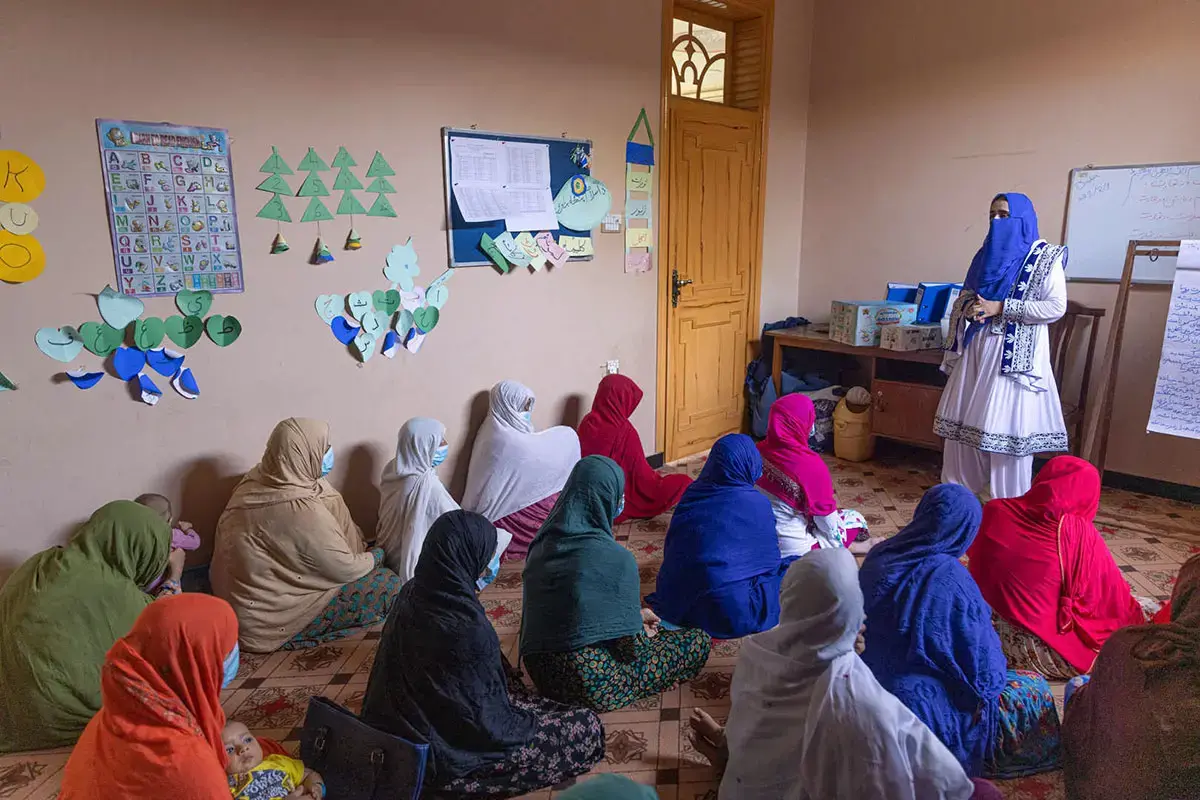
This article explores how Afghan women are using social commerce...
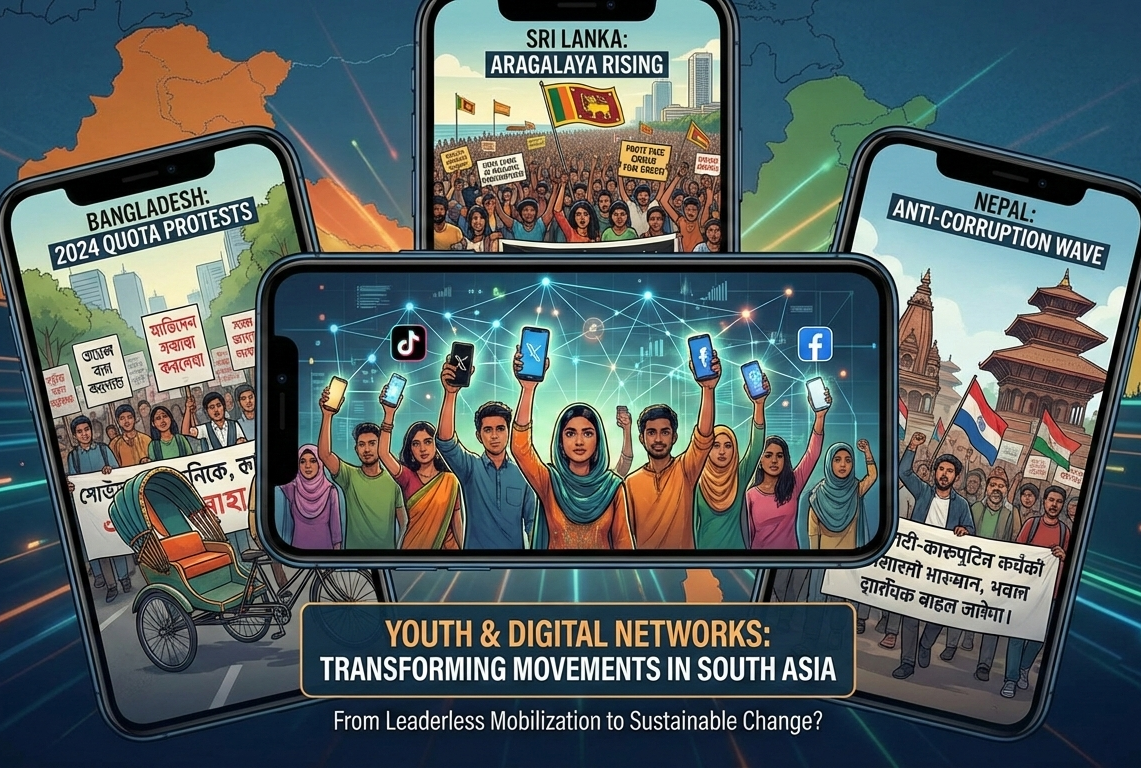
This article examines how youth-led, digitally networked movements are reshaping...
This article examines proposals to privatize religion not as neutral...
This article traces how a tense India-Pakistan cricket game, complete...
This article explains how the Pakistan-Saudi Arabia Strategic Mutual Defence...
This article examines how Afghan women have transformed the struggle...
This article explores how special autonomy in Aceh and Bangsamoro...
This article examines how Malaysia’s political economy sustains social harmony...
This article critiques the Global Innovation Index (GII) for overlooking...
This article examines how technology has become a highly contested...















Leave A Comment