
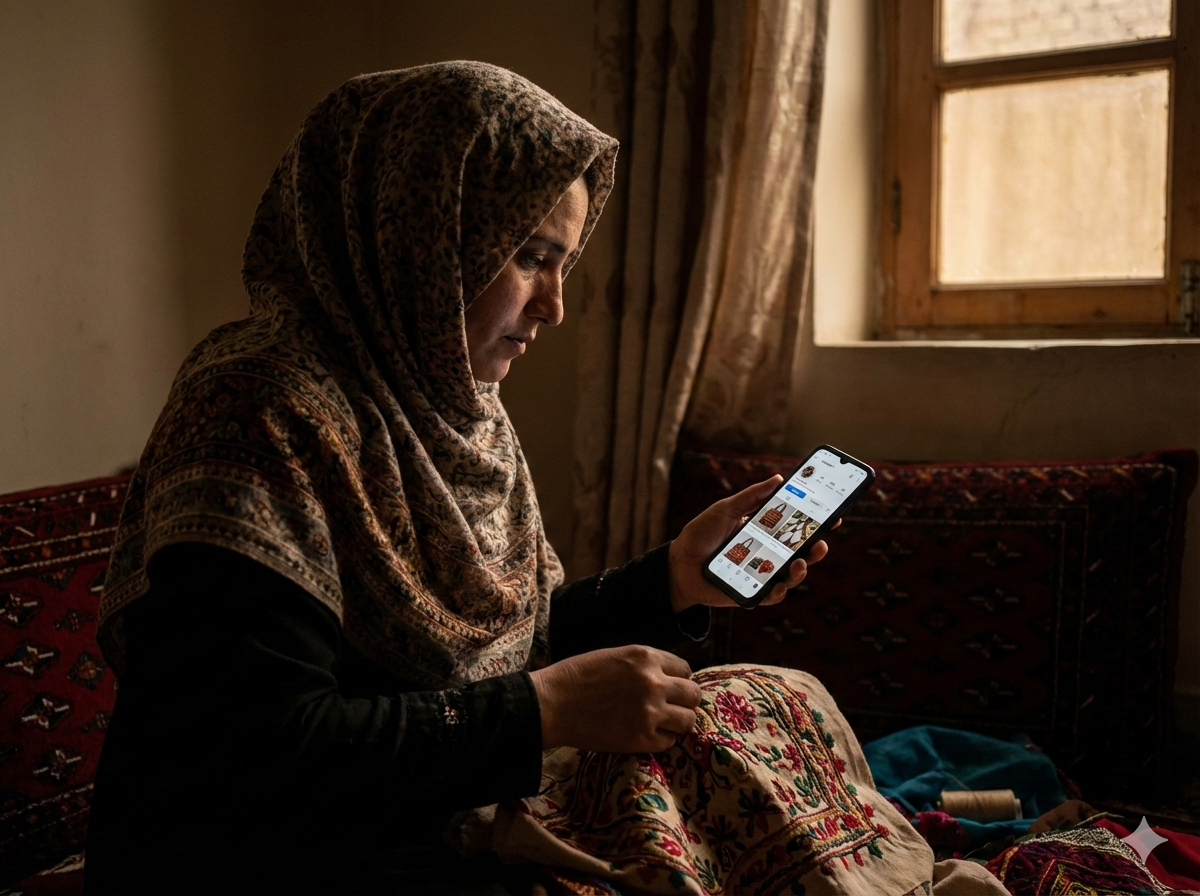
Today, a silent revolution is occurring behind phone screens in Afghanistan, where women are prohibited from attending school, universities and from working in public places. Women are not only purchasing and selling goods on social media sites like Instagram, Facebook, Telegram, and WhatsApp, but they are also regaining their independence. The two stories included in this article come from my own interviews conducted on July 2nd, 2025, while the broader statistics and context come from secondary sources. A 26-year-old woman who used to attend university now owns a business that sells skin care products. Another, a 29-year-old dressmaker, sews from home to help her siblings and her sick father. I thus argue that digital social commerce has become one of the last viable economic spaces for Afghan women, functioning simultaneously as survival, protest, and informal economic participation under authoritarian exclusion.
Afghan women now have a much smaller space since the Taliban regained power in 2021. Both secondary school and university are banned for girls. In most occupations, women are not allowed to work. According to a 2024 UNDP report, Afghan women entrepreneurs continue their small businesses despite deep discrimination, limited access to finance, and restrictions on movement. The study found that 80 percent of women-led enterprises rely on their business income as their main source of livelihood, even as many face debt and operate under severe constraints.
This secondary evidence supports and contextualizes the two personal accounts I collected through interviews.
The UN Sustainable Development Group is approximated to be losing more than a billion dollars every year in Afghanistan because women are not offered a chance to work. The two-income homes are surviving on minimal. But Afghanistan women are not waiting in the obscurity of such restrictions. They are creating small online businesses where they sell hand-sewn clothes and natural products among others through social media. It is not only the work of an entrepreneur but the silent protest in everyday life.
The Afghani women have resorted to social commerce as a survival measure as they support their families and reclaim power since they lack formal education and jobs. My personal interviews will show how individual females depend on digital platforms as a means of survival, and secondary sources will include the country level of economic effects. Together, they indicate that online work has emerged as one of the limited strategies that can be used by Afghan women in 2025.
Such movement must not be assisted by the international community on a charity basis but as an investment in human dignity, digital empowerment and economic resilience.
Women-led Digital Businesses Are Feeding Households
The dressmaker that I interviewed told me on how she began to sew because her university aspirations were shattered. “My father is sick. I had no other option. I took money and borrowed it, purchased some cloth and started making dresses. I work some nights till my eyes can no longer open. This work keeps all my family alive now”.
The same was the story with the skin care seller that I interviewed. She was enrolled and learning prior to the ban. Subsequently, she started to work at home. I package, do promotion, I do everything. It is challenging at times, but a customer who thanks me makes me feel that I am not a worthless person.
These two tales are depictive of a wider truth. According to secondary sources provided by UNDP (2024), approximately 80 percent of women-owned businesses in Afghanistan use their business earnings as their primary income sources, which provide much-desired employment opportunities to other women. My interview results are part of this greater trend as they reveal how these small businesses have turned out to be a lifeline and the sole source of survival to various households.
Social Commerce Is Growing Despite Serious Limitations
There are other challenges that women encounter in online working. There is restricted, poor, and frequently censored Internet access. Networks in the rural and even urban localities are flimsy and costly. Users block out such popular platforms as Instagram and Tik Tok.
There also is social pressure. Women in employment are discriminated, harassed, or even fired by fellow members of the society. One of the interviewees said that people tell him not to work, not to speak, not to tell anything. “But I can’t afford silence.” Women are still expanding their digital business despite these obstacles.
It is established by secondary reports, including Reuters (2024) that very few women-led enterprises in Afghanistan have access to formal capital. The majority of them are dependent on informal loans or personal savings. Although these restrictions exist, some women do everything by themselves in terms of production, marketing, and sales.
This secondary evidence reinforces the firsthand experiences shared by my interview participants.
Supporting These Women Strengthens the Economy
Every small business is not only sustaining a woman behind it. It favors small local tailors, delivery companies, sellers of fabrics and small-scale suppliers. One of the women claimed that she purchases the materials with local sellers, which benefits the rest of the chain.
According to the UN Sustainable Development Group, the Afghanistan economy has been deprived of an estimated one billion dollars annually due to the inability of women to work any longer. It describes how no nation can progress by abandoning half of its population. The report further states that reviving women into the economy is important in alleviating poverty and reviving the country out of crisis. Being locked out of the labor force since the Taliban takeover, thousands of businesses were shut down, and the family incomes dropped significantly. Most women who previously helped to sustain their families have been reduced to poverty status, and there has been increased food insecurity. These consequences at an individual household level can be explained by my interview findings with the global data showing their impact on a national level.
Others claim that attention to social commerce does not pay attention to unjust structuralism. That’s fair. These women are not voluntarily working; they are working due to necessity. Their creativity and power, however, must not be neglected. Although the ultimate objective should be to reinstate education and equal rights, there is no need to care about social commerce nowadays. It is a lifeline.
Voices From Afghan Women
A 26-year-old woman who now sells skin care products online shared, “I was a student before. After the university ban, I started from scratch. I handle everything myself; customers, packing, promotion. When someone tells me they love the product, it gives me hope.”
A 29-year-old dressmaker added, “I wanted to be a doctor. Now I sew dresses to keep my family fed. I’m not where I thought I would be, but I’m proud of what I’ve built.”
These narratives are based on the author’s own primary data, collected through secure online interviews on July 2nd, 2025. For safety, names and locations are withheld.
Afghan women have been pushed out of public life, but they are building new paths in digital spaces. Through WhatsApp, Instagram, Facebook and Telegram, they are creating jobs, income, and hope one customer at a time. These businesses deserve recognition, not just admiration.
The combination of my interviews and secondary sources shows that digital entrepreneurship provides survival income, women are creating their own economic spaces, and social commerce has become one of the few remaining avenues for women’s participation in economic life.
The international community, NGOs, and tech companies can help by providing better internet access, mobile-friendly business tools, digital training, and pathways for women to reach customers beyond Afghanistan. Afghan women are not invisible. They are resilient. And they are still working, quietly but powerfully toward a future they refuse to give up on.
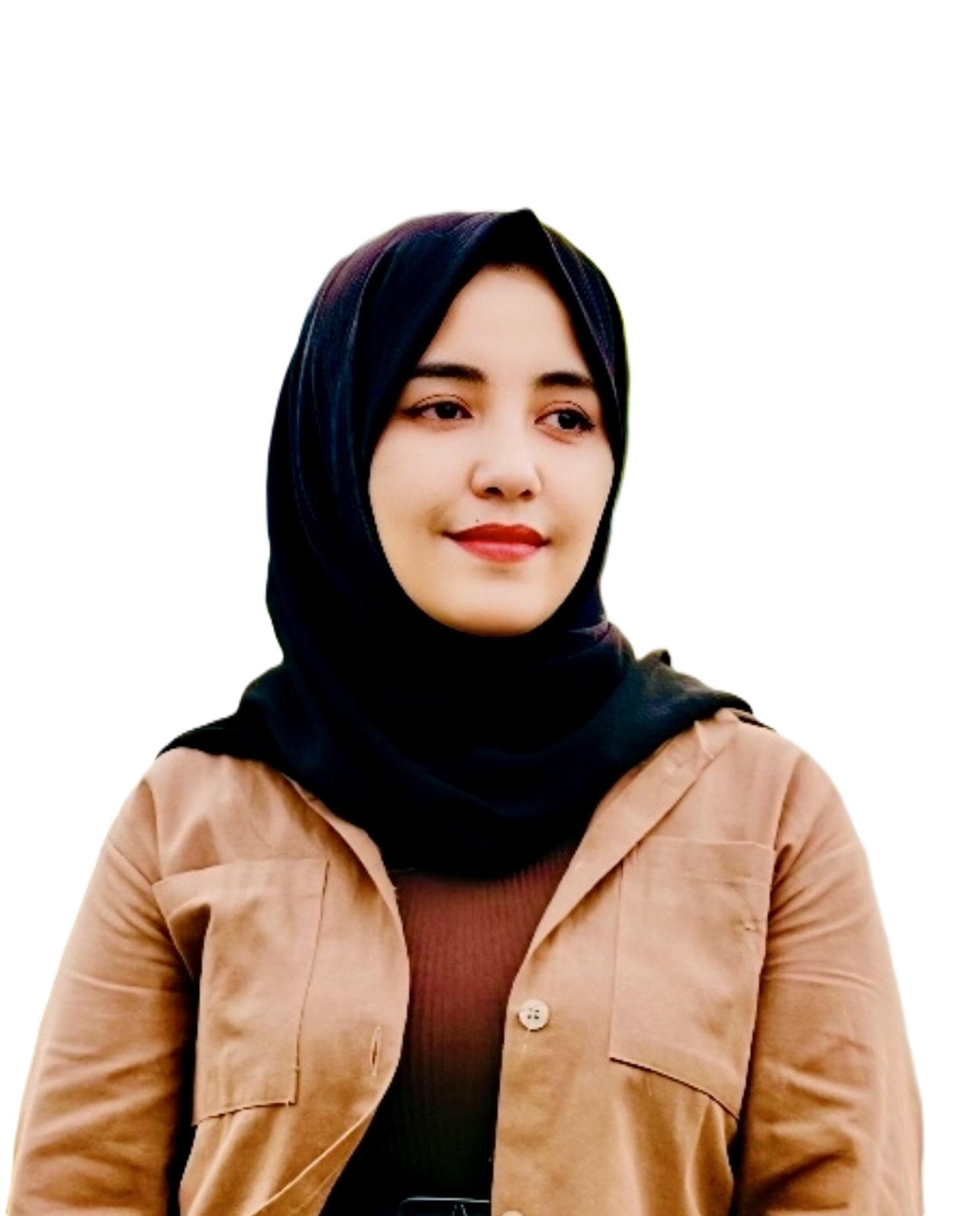
Ziyada Hafizi is an Afghan economist currently pursuing a Master’s degree in Economics at Universitas Islam Internasional Indonesia (UIII). She holds a Bachelor’s degree in Economics from Badakhshan University, and her research interests focus on women’s empowerment, entrepreneurship, and economic development.
In "Lebanon's chronic blackout issue is not just an engineering...
This article asks whether Indonesia is showing early symptoms of...
This article documents the systematic repression of Pan-African activists, journalists,...
This article looks at how Pakistan's 2024 General Elections were...
This article examines the tragic death of a child in...
This article examines poverty alleviation efforts in Kebumen Regency, Central...
This article critically examines Indonesia’s Makan Bergizi Gratis (MBG) programme,...
This article examines the socio-political impact of Pandji Pragiwaksono’s stand-up...
This article examines the persistent "political masculinity" in Indonesia, 41...
This article examines why Islamic political parties in Indonesia remain...
This article examines the global rise of school meal programs,...
This article examines Dhurandhar not merely as a commercial Bollywood...
This article highlight the development of IT that has been...
This article explores how Afghan women are using social commerce...
This article examines how youth-led, digitally networked movements are reshaping...
This article examines proposals to privatize religion not as neutral...
This article traces how a tense India-Pakistan cricket game, complete...
This article explains how the Pakistan-Saudi Arabia Strategic Mutual Defence...
This article examines how Afghan women have transformed the struggle...
This article explores how special autonomy in Aceh and Bangsamoro...
This article examines how Malaysia’s political economy sustains social harmony...
This article critiques the Global Innovation Index (GII) for overlooking...
This article examines how technology has become a highly contested...
This article takes a deep dive into Indonesia’s evolving struggle...








Leave A Comment