

Undersea cables sit at the center of grey zone warfare and international strategic debates. In January 2026, Baltic littoral countries entered a state of heightened alert following a string of subsea damage cable incidents. Pronounced concerns about sabotage or espionage of sea-bed infrastructure, a strategic leverage for adversaries, has led countries like Philippines, Taiwan, Australia, US, and China among other countries to step up efforts to protect undersea cables. As a part of its Action Plan on Cable Security and Digital Europe Programme, the European Commission announced funding for Regional Cable Hubs in 2025, aimed at monitoring threats and improving submarine cable resilience.
Strategic Contestations Under the Sea
In order to strengthen deterrence, countries have started diversifying from long established route clusters in strategic geographies. In the wake of stoked up tension with China, Taiwan is diversifying its connectivity to reduce reliance on vulnerable physical connectivity routes positioned in contested waters. As a part of defence preparedness under the Pukpuk Treaty, wherein Australia has committed to support undersea cable connectivity across the Pacific and Timor-Leste, Google has been hired to build three undersea cables in Papua New Guinea. In recent years, Australia and the United States have funded various subsea cables across the Pacific Islands, to block a push by China to build the vital communication links.
The lifeline of digital connectivity, the fibre optic cables has become a central arena for under- sea major power rivalry in order to compete for construction, maintenance, and routing of digital infrastructure. Trump administration launched a comprehensive digital security "Clean Network" initiative, to counter China's growing influence in the global digital infrastructure. As part of its Digital Silk Road (DSR) under the Belt and Road Initiative (BRI) aimed at reducing reliance on Western-controlled networks, China launched the PEACE (Pakistan and East Africa Connecting Europe) submarine cable, a 15,000-kilometre undersea link that connects Singapore and France, extending its reach to Malaysia and various European countries.
Centrality of India in Data Superhighways
Several submarine cables run through strategic waters of the Indian Ocean Region, vital to trade and communication intra-linking and interlinking the region with near and far shore continents. India as a frontline actor in revolutionising digital public infrastructure is integral to any form of diplomacy and security architecture aimed at protecting submarine cables along with likeminded democratic nations.
India, relying heavily on undersea fiber optic cables for its intercontinental data, is emerging as an important actor in cultivating "data superhighways," with new undersea cable systems in operations and landing stations involving private stakeholders ( Google, Meta, Bharti Airtel, and Reliance Jeo) like India-Asia-Xpress (IAX)that connects Mumbai and Chennai to Singapore, Thailand, and Malaysia; India-Europe-Xpress (IEX)that links Mumbai to Europe via the Middle East and Africa, with landings in France, Greece, and Italy; 2Africa Pearls designed to boost connectivity to the Gulf, Pakistan, and India, connecting these regions with 33 countries across Africa, the Middle East, and Europe. the Middle East, and Europe; Blue-Raman, a Google-backed intercontinental fiber-optic cable system designed to connect Mumbai, India, to Genoa, Italy; MIST (Myanmar-Malaysia-India-Singapore Transit) connecting India (Mumbai & Chennai) with Malaysia, Singapore, Myanmar, & Thailand with landing stations in Mumbai (Versova) & Chennai (Santhome). Beyond dominant gateways like Mumbai in the West Coast and Chennai in the East Coast, operational infrastructures are being built in non-metropolitan sea borne locations like Digha, Bhubaneshwar, Puducherry, Kochi, and Vishakhapatanam.
Along with its concerted effort to take abroad its own digitalising operative systems, India is also functional in exploring intercontinental power cables with countries like UAE ( under One Sun One World One Grid initiative) and Sri Lanka.
The global undersea cable market is dominated by a few players with Japan (41 per cent), the United States (20 per cent), China (19 per cent), France (18 per cent) and Germany (2 per cent). India is targeting a significant share of the global submarine cable market projected to grow to US$40.5 billion by 2028.
India, host to 17+ international submarine cables, is committed to invest in the Indian Ocean internet infrastructure. It is a member of the International Advisory Body for Submarine Cable Resilience, a global initiative to improve the security, reliability, and rapid repair of submarine cables launched by the ITU and ICPC in late 2024. Reports claim the upcoming India- EU Summit will deliberate on security and resilience of undersea cables as part of broader focus on boosting maritime security in the Indian Ocean region.
Multi-Pronged Risks and Limited Regulations
The risks involving submarine cables are multi-pronged. First, the installation of fiber optics on approachable shipping routes makes it easier for adversaries to use it not only for sabotage activities but block repairing activities resulting in prolonged communication blackouts. Second, a sabotage activity might have a knock on effect on other countries in the region affecting overall exchange of data and communication systems. Third, the nature of multi stakeholder partnership bears multiple complexities. To elaborate, "Big Tech" now dominates the undersea cable market. Companies like Google, Meta, Amazon, and Microsoft control more than 70% of transcontinental cable capacity as of 2024–2025.
The added advantage of big tech investment on the projects draws attention to the inter-complexities of the limits of private stakeholder, territorial sovereignty and jurisdiction issues involving multiple frontline and inland states. To be precise, undersea cables come ashore at designated “landing points” from where they connect to “landing stations” inland, where they integrate with major networks. Once on land, undersea cables link to terrestrial networks (a web of less-visible infrastructure like towers and cables) that deliver internet to homes and businesses. Hence any form of challenge navigation would require the calculation of the multiple number of possibilities of state and non-state actors/ irritants exploiting landing stations and network controls, even repairing capabilities.
The reported sabotage activities in Taiwan Strait, Baltic Seas, and Red Sea hold lessons indicating the urgency and underpreparation of frontline and transit states to address intersected hybrid threats prevalent in the seabed. UNCLOS was drafted in an era when cable threats were mostly accidental. It did not anticipate modern hybrid challenges or sponsored sabotage tactic. Recent incidents expose these gaps.
Security and legislative protection measures are slowly catching up with the pace of growth of super data highways across the world. An enhanced and paced up effort to fund and facilitate greater multi-stakeholder cooperation and coordination is required to create a neutral and effective security architecture. Any form of private- public and government to government initiative must also take into account the impact of intersecting hybrid threats on under sea cables including natural disasters and technical failures.

Dr. Angana Guha Roy is currently working as an Associate Director at the Asian Institute of Diplomacy and International Affairs, Kathmandu. She writes on Foreign Policy, Geopolitics, Defence and National Security, and other prominent issues in International Relations. Please contact her at : anganaguharoy@gmail.com
In this article, Aniello Iannone critically evaluates the ten-year trajectory...
The global order is moving beyond rigid bloc politics toward...
In this article, Luo Chen Jun highlights a striking historical...
In this article, Muhamad Ferdy Firmansyah highlights how climate technology...
In his latest article, Aniello Iannone examines the gap between...
This article analyzes Indonesia's ambitious military modernization through its strategic...
DeepRare is being hailed as a major breakthrough in the...
This article analyzes President Prabowo’s decision to skip the June...
This article analyzes the phenomenon of "sibling rivalry" at the...
This article evaluates the normative frameworks offered by China’s four...
This article examines the 2025 Thailand–Cambodia border conflict to evaluate...
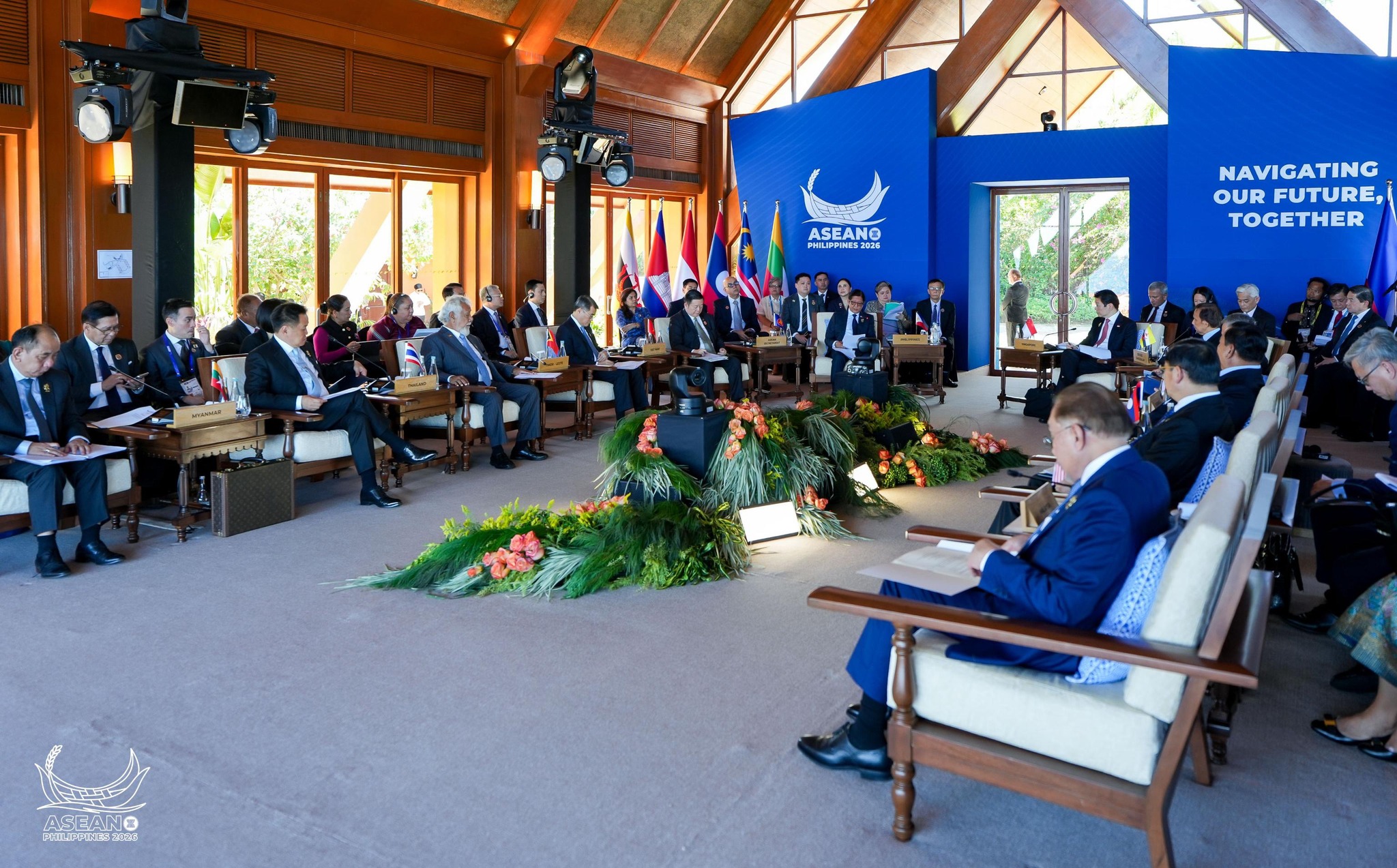
This article examines the May 2026 ASEAN Summit in Cebu...
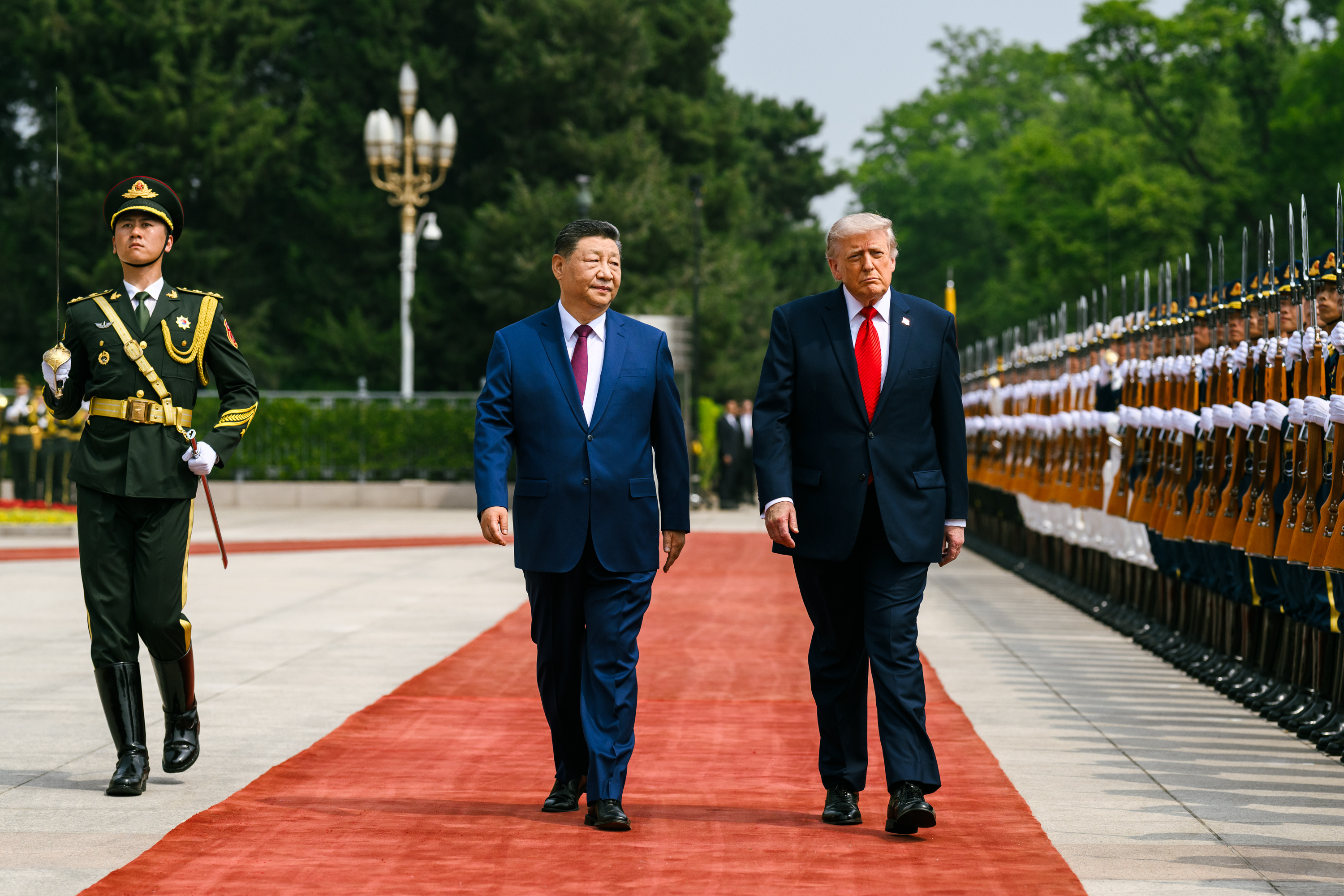
This article examines the May 2026 Beijing summit between Xi...
This article examines how the rise of narcissistic foreign policy—exemplified...
In October 2025, Indonesia's President Prabowo Subianto announced that Portuguese...
This article argues that recent U.S.–Israel military actions against Iran...
This article examines Türkiye’s evolving "Third Way" in Africa, an...
This article critically examines Indonesia’s evolving role from a quiet...
This article provides a firsthand account of how Pakistan emerged...
This article examines how disruptions in the Strait of Hormuz...
This article examines Indonesia’s participation in the Board of Peace...
This article examines what the attempted sale of CK Hutchison's...
This article examines the Kudankulam Nuclear Power Plant as a...
This article examines Nepal’s strategic position within the Indo-Pacific and...







Leave A Comment