

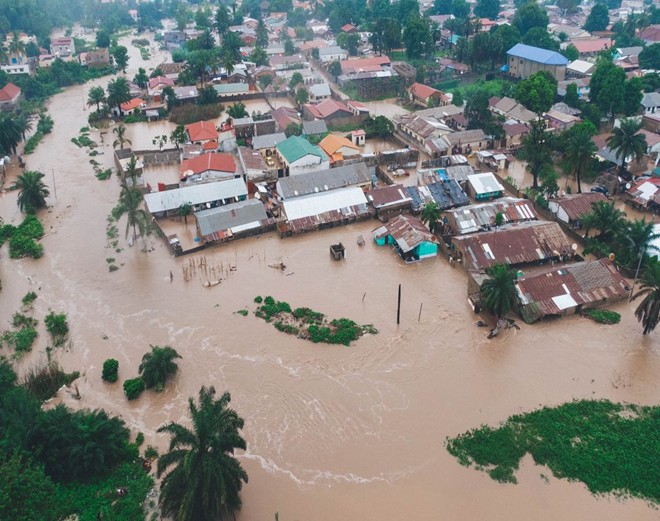
By the end of 2025, Indonesia faced a familiar but all-too-expensive reality: disasters are no longer an exceptional interruption to development plans; they have become a budgetary force majeure. The eruption of Mount Semeru in East Java, flash floods and landslides across western and northern Sumatra, and other natural hazards, effected thousands of people’s loss of life, mass displacement, and long-term economic disruption. Those vulnerabilities require a structural response in strategic policy and public budgeting.
The National Agency for Disaster Countermeasure (BNPB) highlighted the gravity of the challenges. Indonesia was struck by 22,468 disasters from 2020 to 2024. From January to 29 December 2025, BNPB also recorded a total of 3,165 disasters, including floods and extreme weather, landslides, forest and land fires, coastal abrasion, earthquakes, droughts, and volcanic eruptions. The human and economic toll was crushing: 1,552 deaths; upward of 10.3 million others affected or displaced; damage to nearly 195,621 homes and 2,533 public facilities.
Disaster management to climate-responsive public finance
What fiscal tool best bridges disaster management and climate action? One useful entry point is climate-responsive budgeting (CRB), which considers climate and disaster risk as criteria for guiding fiscal planning, expenditure choices, and accountability systems. Climate Ambition to Accountability Project (2023) mentioned in a recent policy brief that CRB defined as the use of budgeting tools to deliberately incorporate climate goals into budget processes, as well as affirmed that it is a category of public finance management to systematically integrate fiscal decision-making with climate ambition. This is significant because Indonesia’s disaster profile is increasingly characterised by hydrometeorological risks at the intersection of climate variability, land use, and uneven local capacity, which could not be adequately managed through response financing alone.
Indonesia has been operated two-pronged disaster-financing logic: prevention and recovery spending woven through line ministries and local governments, together with flexible contingency or “on-call” reserves that can be activated quickly. The state budget (APBN) provision on disaster reserve allocation for 2016–2025 ranged from USD 187,5 million to USD 468,8 million, with USD 312,5 million allocated in 2025. The local governments also allocated various degrees of contingency expenditures annually as mandated by the regulation.
But a strong fiscal system is more than just reserve funds. It requires credible tracking, evaluation, and governance, as flexible emergency mechanisms often entail accountability risks. In 2024, the Audit Board of the Republic of Indonesia (BPK) identified potential risks of disaster preparedness budget managed by BNPB, including procurement and distribution and usage of ready-to-use funds, and they monitored the follow-up of the findings which was written on recommendations.
This is why budget tagging matters. Indonesia has also led in the use of thematic approaches to make policy priorities more visible in budgets. The gender-sensitive climate budgeting handbook defines tagging as the insertion of an identification tag into a line item in a budget document that indicates, for monitoring and identification purposes, what the output from performing that activity is (INS/UNDP et al., p. 19). Tagging is not just administrative; it lets governments, parliaments, auditors, and the public see whether priorities had the resources behind them and whether those funds were used as intended.
Indonesia’s Climate Budget Tagging (CBT) is relevant to mainstream disaster risk reduction into climate action. The handbook guides monitoring and tracking how much the Government has spent on mitigation and adaptation (INS/UNDP and partners 20). CBT, established in 2014 and scaled up since 2018, now covers 18 ministries and institutions in both areas. However, only 45% of national spending currently carries a climate budget tag, leaving significant room for expansion. This gap underscores the potential impact of scaling up CBT to cover all national expenditures effectively and ensure robust integration of climate goals into financial planning.
International experience warns that tagging can be superficial if poorly assured. Climate Action Network (CAN) and World Wildlife Fund (WWF) in their policy brief (2023) notes that CBT should include negative expenditures (from a climate perspective), social implications, gender, and the revenue ratio. Without these, a system risks greenwashing by overstating green spending and understating spending that locks in risk or reduces mitigation.
The other two are transparency and independent oversight. In Honduras, the International Budget Partnership (IBP) notes that audit reports are often the only independent checks on government expenditure (Guzman, 2022, p. 19). This is important in Indonesia’s disaster context, where emergency procurement and return timing can weaken regular controls. Strengthening oversight is not just about classification, but ties into the whole public financial management cycle: planning, implementation, reporting, and auditing. The engagement of civil society organizations through participatory audits, will ensure that oversight is not merely bureaucratic but involves citizens actively. This model not only increases accountability, also builds public trust, which can broaden political support for stronger controls. Such involvement allows citizens to see the direct impact of their engagement, reinforcing transparency in resilience spending and ensuring it remains both effective and credible.
A policy roadmap for Indonesia and its international partners
The campaign of disaster and climate-responsive budgeting should collectively work towards three end results simultaneously: adequacy, quality of allocation, and accountability. First, a clear timeline is essential. Within the next 12 months, Indonesia needs to embed disaster risk reduction across all aspects of its climate adaptation and development planning, moving beyond treating it as an occasional emergency response. By 2027, these expenditures should be permanently and consistently risk-informed. This involves screening infrastructure investments against climate and hazard exposure and ensuring that maintenance budgets are protected from regular cuts. Moreover, upstream prevention initiatives, including watershed management, slope stabilization, resilient housing, and early warning systems, must be securely financed as part of a standing investment portfolio.
Second, Indonesia needs to expand tagging beyond the CRB to build a system covering all aspects of fiscal policy. This should track both positive climate spending and climate-negative expenditures and revenue measures. It should monitor the distributional effects of climate and disaster spending. A disaster-resilient budget protects livelihoods, health, and mobility, especially for the most susceptible.
Third, the government must enhance governance mechanisms to safeguard public trust and minimize leakage risks. Indonesia’s assessment highlights misconceptions: flexible disaster funds are seen as prone to misuse, and audits have revealed persistent governance weaknesses. Therefore, open publication of tagged allocations and realizations in user-friendly formats is required. Establishing or utilizing an open-budget portal where citizens can access this tagged data is crucial. This portal would serve as a practical channel, ensuring transparency ideals are matched by strong delivery mechanisms. Strong internal controls on emergency procurement, regular external audits with timely public explanations, and parliamentary and civil society oversight throughout the budget cycle are essential.
Finally, international actors must support this fiscal architecture by shifting from piecemeal projects to building systems and ensuring predictable finance. Indonesia cannot build fiscal resilience through emergency funding alone. Instead, it requires fiscal plans that forecast risk, prioritize prevention, transparently report climate and disaster spending, and prove investments decrease vulnerability. In a vulnerable country which face multiple disaster risk like Indonesia, CRB is not a boutique reform but an essential step to save lives, protect development, and sustain public trust.

Hadi Prayitno is an Indonesian public finance and budget policy specialist with over two decades of experience in governance, research, and capacity development. He leads The Reform Initiatives (TRI) as Executive Director. His work focuses on strengthening budget transparency and social accountability, supporting decentralization, and advancing climate-responsive budgeting.
This article examines how the systemic failure of urban waste...
Indonesia is spending Rp 75.8 trillion (around US$4.7 billion) building...
This article analyzes climate vulnerability across Economic Community of West...
This article argues that addressing climate change in the Global...
This article examines Indonesia’s transition from reactive emergency disaster spending...
This article examines the DRC–Rwanda peace accord through the lens...
This article offers a comparative reflection on how Islam has...
This article examines how youth-led, digitally networked movements are reshaping...
This article examines why forest-based approaches remain critical for addressing...
This article exposes the injustice of Afghanistan’s exclusion from COP30...
This article highlights the significant emotional and mental health burden...
This article defines Code Green as a model of public...
This article analyzes how China’s ambitious green transition serves not...
This article traces how the 2025 UN General Assembly turned...
This article looks at how Indonesia’s provinces with extensive biodiversity...
This article examines how climate change and privatization intersect to...
This article analyzes how Trump’s second time withdrawal from the...
This article critically analyses Pakistan’s worst floods ranging from the...
This article examines the climate vulnerabilities of Pari Island in...
This article traces how Pari Island in Jakarta’s Thousand Islands...
This article explores how ecotourism in Indonesia’s Thousand Islands generates...
This article compares how U.S. Presidents Joe Biden and Donald...
This article explores the devastating impact of human activities such...
This article critically examines the European Union’s Carbon Border Adjustment...















Leave A Comment