
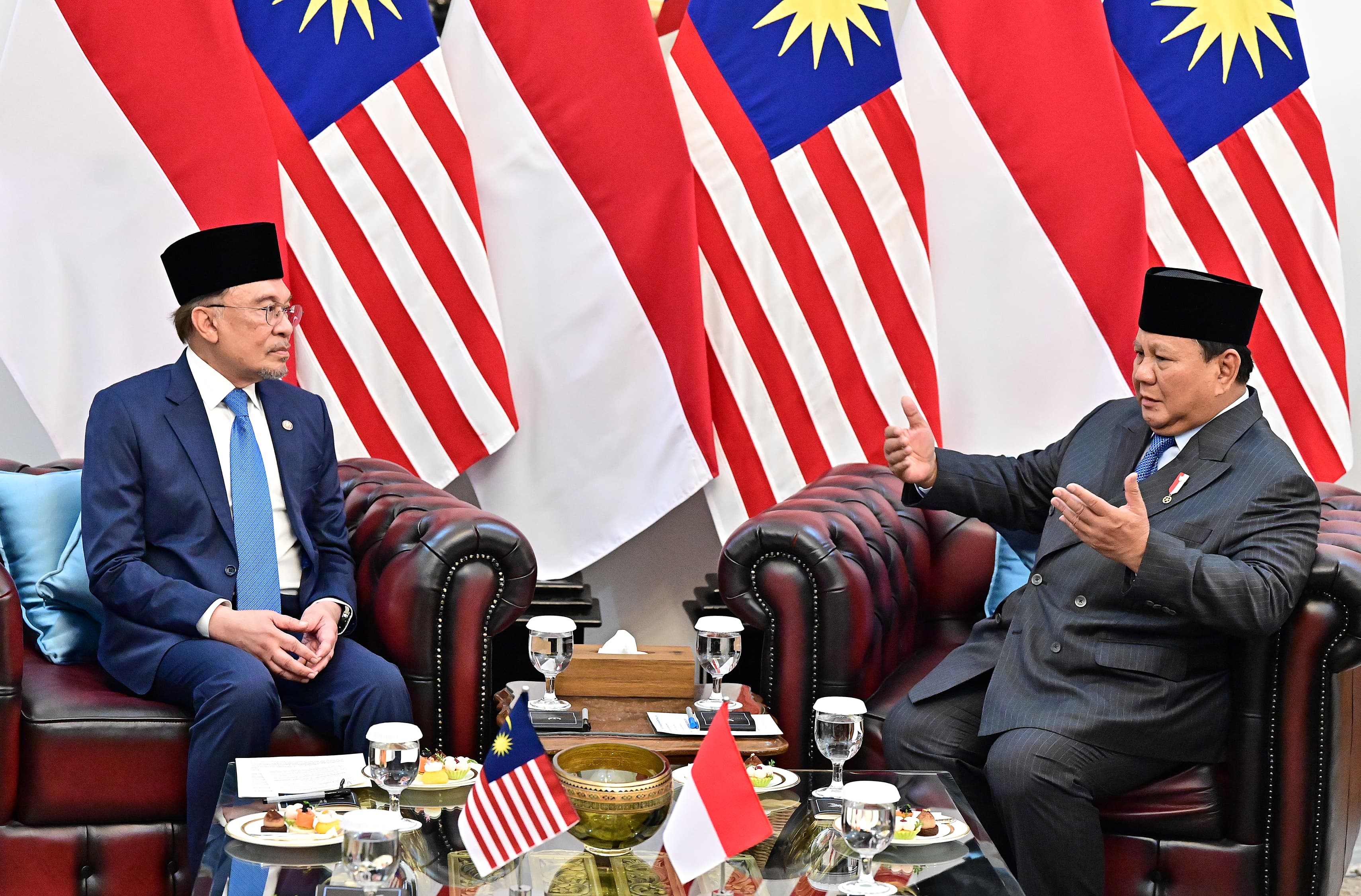
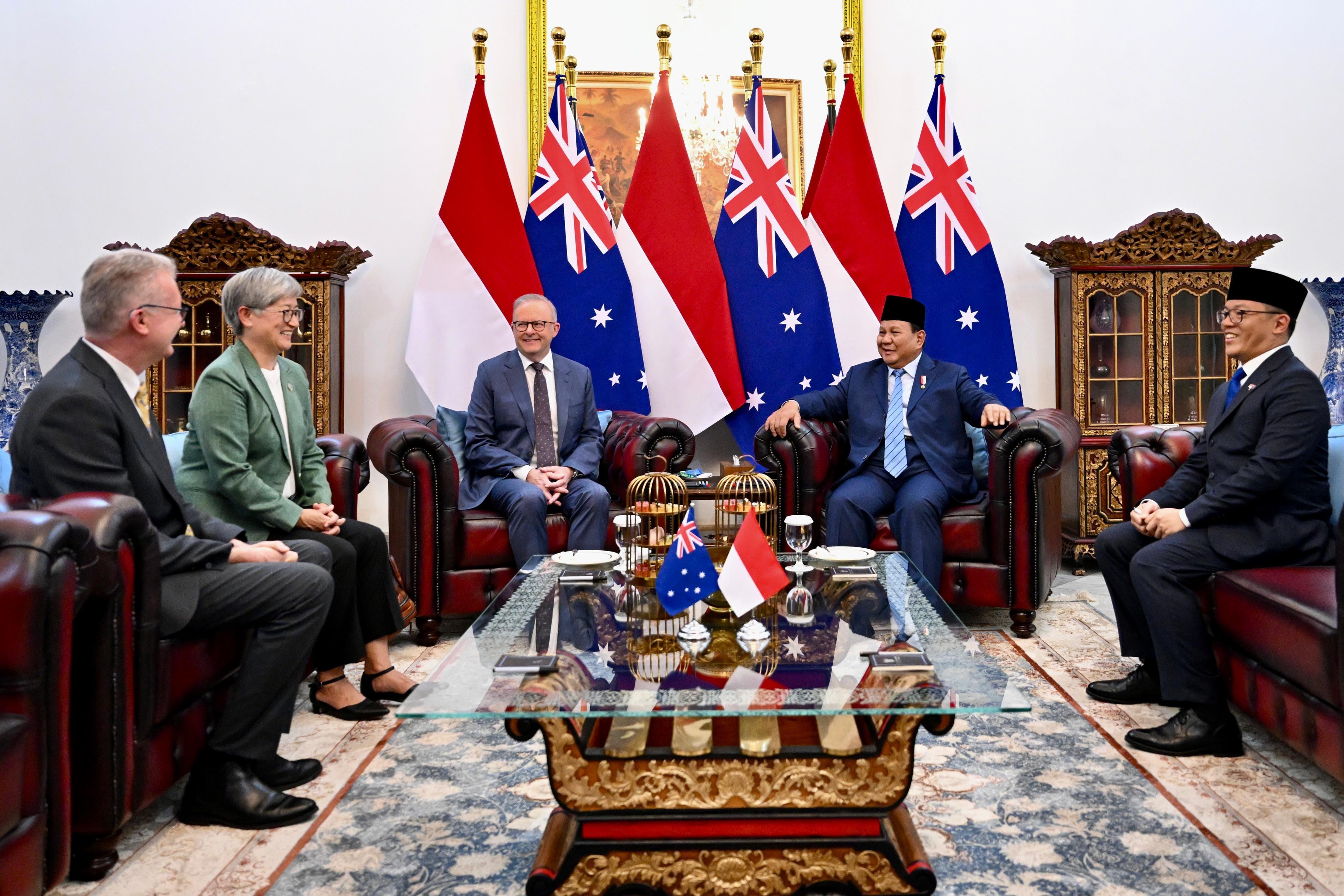
Image credit: Merahputih.com - Prabowo Subianto and Anwar Ibrahim during a state visit at the Merdeka Palace in Jakarta on Tuesday, July 29, 2025. Photo: Muchlis Jr. - Presidential Secretariat Press Bureau
ASEAN’s Structural Vulnerability to Energy Disruptions
The Strait of Hormuz has once again become a global flashpoint not just as a maritime chokepoint but as a litmus test for regional solidarity. As oil and liquefied natural gas (LNG) shipments slowed or halted, Asian economies felt the shockwave: production lines paused, fuel prices spiked, and governments scrambled for contingency plans. In Southeast Asia, this crisis has also exposed the limits of ASEAN as a collective security actor. When Indonesia’s Defence Minister Prabowo Subianto and Malaysian Prime Minister Anwar Ibrahim met in Selangor for a three‑hour discussion, the Strait of Hormuz was on the table but the outcome was framed largely through bilateral diplomacy, not through a unified ASEAN stance. Behind the warm optics lies a troubling question: Where is the collective solidarity of ASEAN when the security of the Strait of Hormuz is at stake?
Southeast Asian economies are among the most vulnerable to disruptions in Hormuz‑bound energy flows. Recent analyses show that roughly four‑fifths of crude oil moving through the Strait is destined for Asian markets, with major importers like China, India, Japan, South Korea, Thailand, the Philippines, and Indonesia itself heavily reliant on uninterrupted seaborne supplies. In 2024, about 84 percent of crude and 83 percent of LNG passing through Hormuz were headed to Asia, underscoring how deeply embedded fossil‑fuel dependence is in the region’s growth model. This structural vulnerability is not lost on policymakers, yet ASEAN’s institutional response remains fragmented and reactive rather than strategic and preventive.
Bilateral Diplomacy as Default Crisis Response
Against this backdrop, bilateral diplomacy has become a default crisis‑management tool. Malaysia’s recent success in securing a special arrangement with Iran for its flag‑carrier vessels publicly announced and explicitly praised by Prime Minister Anwar stood in stark contrast to Indonesia’s more precarious position, where state‑owned tankers remained in limbo awaiting permissions despite ongoing negotiations. This divergence highlights how individual states with different diplomatic leverage or regional weight can secure “energy‑safe passage” for themselves, while others are left waiting or negotiating in the shadows. The message, however inadvertently, is that in the Strait of Hormuz, your fate depends less on ASEAN’s collective voice and more on your bilateral bargaining power.
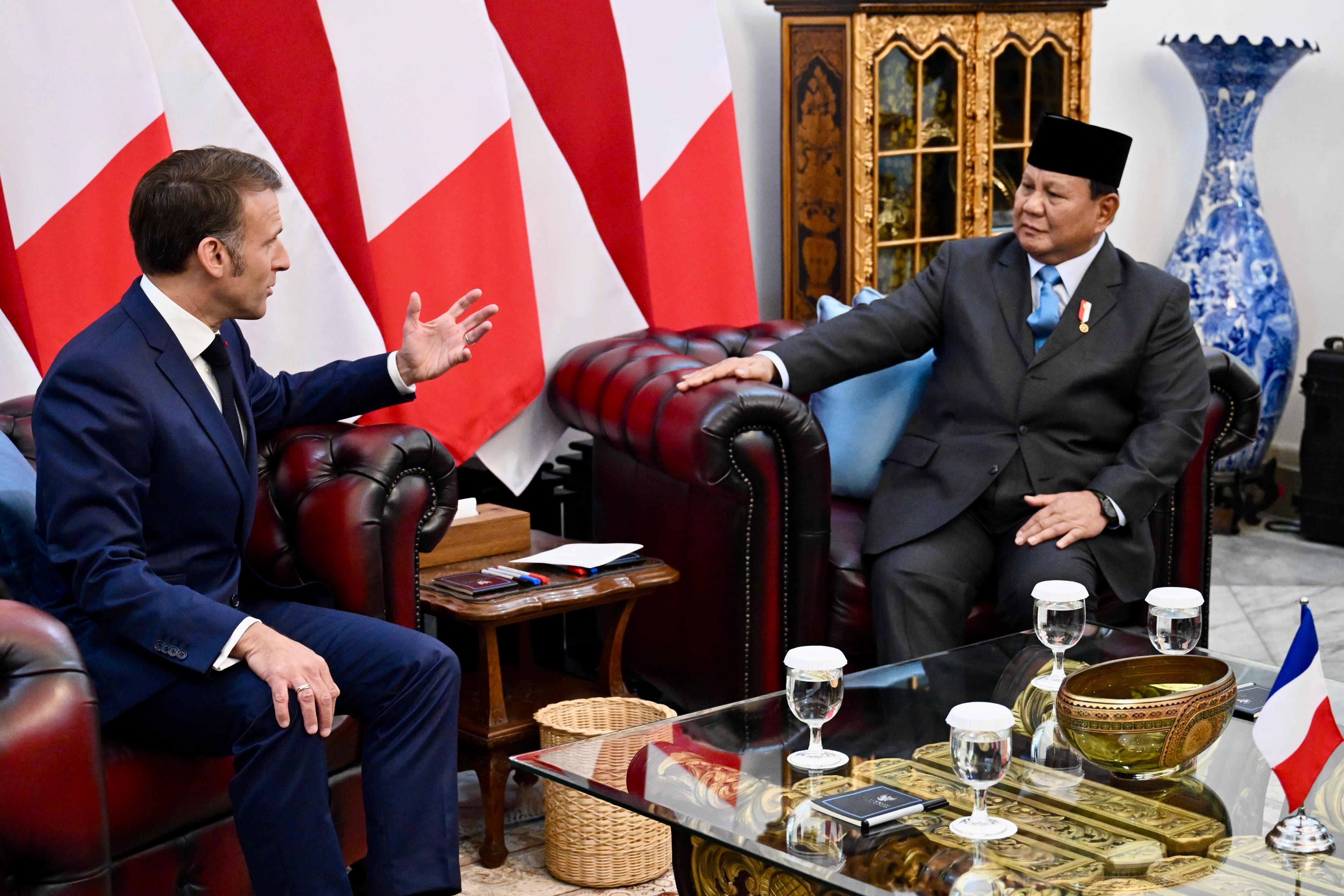
Prabowo and Anwar’s extended conversation, reportedly covering the Strait, security, and trade, fits into this pattern of bilateralism overshadowing multilateralism. Both leaders emphasized the importance of stable energy flows and regional security, but the mechanics of the discussion echoed familiar themes: coordinated patrols, intelligence sharing, and reassurances about the safety of commercial routes. None of these points, however, were framed as ASEAN‑centred commitments. Instead, the narrative is one of Indonesia and Malaysia “working together,” while the larger regional architecture of ASEAN remains in the background, invoked in generalities but not operationalised in concrete agreements.
ASEAN’s Institutional Limits in Security and Energy Governance
ASEAN’s institutional limitations in this area are by no means new. The association has long struggled to translate its “centrality” into hard security and energy governance. At the 2025 ASEAN Summit, leaders endorsed a regional power‑grid integration initiative and a 2045 vision for interconnected energy systems, yet these are framed as long‑term economic and infrastructure projects, not as immediate security responses to chokepoints like Hormuz. The gap between aspirational regional integration and real‑time geopolitical crisis is where bilateral diplomacy rushes in, often at the expense of solidarity.
The securitisation of energy in the Strait raises another uncomfortable point: ASEAN’s members are more comfortable treating energy as a commercial or bilateral issue than as a collective security one. Academic work on securitisation in the Hormuz context shows that energy security is often framed through national survival narratives, military alliances, and bilateral protective arrangements, rather than through regional institutions. This pattern repeats itself in Southeast Asia, where Indonesia, Malaysia, and Singapore may coordinate naval patrols or intelligence sharing among themselves, but do not present a unified ASEAN‑wide strategy to Tehran, Washington, or the Gulf monarchies. The absence of a clear ASEAN “voice” on Hormuz signals to external actors that Southeast Asia is a collection of individual states, not a cohesive bloc.
Furthermore, the Prabowo–Anwar dialogue reflects a broader trend: ASEAN’s reliance on ad hoc crisis diplomacy instead of institutionalised mechanisms. When a conflict zone emerges, key Southeast Asian states rely on personal rapport, high‑level phone calls, and informal agreements rather than on ASEAN‑based protocols for energy security, contingency shipping corridors, or collective hedging arrangements. The region’s leadership talks about “ASEAN unity” and “regional stability,” but these are rhetorical anchors, not operational doctrines. In the Strait of Hormuz, where every ship’s movement is a political act, words without institutional backing easily become hollow.
From Fragmentation to Collective Action: The Way Forward
This is not to deny the pragmatism of bilateralism. In a moment of acute crisis, having a channel of direct communication with Iran or with major Western powers can be essential. Malaysia’s ability to secure a specific passageway for its vessels, for instance, prevented immediate fuel shortages and economic disruption. Yet such successes come at the cost of perpetuating the idea that solidarity is optional, negotiable, and individually earned. If ASEAN’s core principle is that “no member should be left behind,” then the current arrangement around Hormuz violates that spirit. The question of where the collective solidarity lies becomes sharper when one country can talk its way into safety while another remains locked out.
If ASEAN is to be taken seriously as a regional security architecture, it must move beyond symbolic unity and develop a concrete energy security posture around strategic chokepoints. This could include ASEAN‑led coordination mechanisms for rerouting supplies, stockpiling, or even joint negotiations with transit states and major energy producers. It could also entail a more explicit regional agreement on energy passage rights, based on international law and supported by ASEAN‑centred maritime confidence‑building measures. The alternative is a future where every new crisis in Hormuz, or any other chokepoint, is handled through bilateral fix‑ups that leave the region’s collective vulnerability intact.
The Prabowo-Anwar conversation, therefore, should be read as both a symptom and a warning. It is symptomatic of a region that still prefers the comfort of bilateral geopolitics to the discomfort of collective decision‑making. It is also a warning that unless ASEAN institutionalises its energy‑security agenda, the Strait of Hormuz will continue to be a stage where individual states perform their diplomatic prowess, while the association as a whole remains on hold. Where, then, is ASEAN’s collective solidarity? For now, it is still waiting for the region to choose unity over expediency.

Nani Septianie is a Master's student at Universitas Gadjah Mada majoring in International Relations. Her research interests include ASEAN Studies, South-South Cooperation
In "Structural Aseanisation," Aniello Ianone explores Europe's strategic shift in...
In this article, Aniello Iannone critically evaluates the ten-year trajectory...
The global order is moving beyond rigid bloc politics toward...
In this article, Luo Chen Jun highlights a striking historical...
In this article, Muhamad Ferdy Firmansyah highlights how climate technology...
In his latest article, Aniello Iannone examines the gap between...
This article analyzes Indonesia's ambitious military modernization through its strategic...
DeepRare is being hailed as a major breakthrough in the...
This article analyzes President Prabowo’s decision to skip the June...
This article analyzes the phenomenon of "sibling rivalry" at the...
This article evaluates the normative frameworks offered by China’s four...
This article examines the 2025 Thailand–Cambodia border conflict to evaluate...
This article examines the May 2026 ASEAN Summit in Cebu...
This article examines the May 2026 Beijing summit between Xi...
This article examines how the rise of narcissistic foreign policy—exemplified...
In October 2025, Indonesia's President Prabowo Subianto announced that Portuguese...
This article argues that recent U.S.–Israel military actions against Iran...
This article examines Türkiye’s evolving "Third Way" in Africa, an...
This article critically examines Indonesia’s evolving role from a quiet...
This article provides a firsthand account of how Pakistan emerged...
This article examines how disruptions in the Strait of Hormuz...
This article examines Indonesia’s participation in the Board of Peace...
This article examines what the attempted sale of CK Hutchison's...
This article examines the Kudankulam Nuclear Power Plant as a...





Leave A Comment