
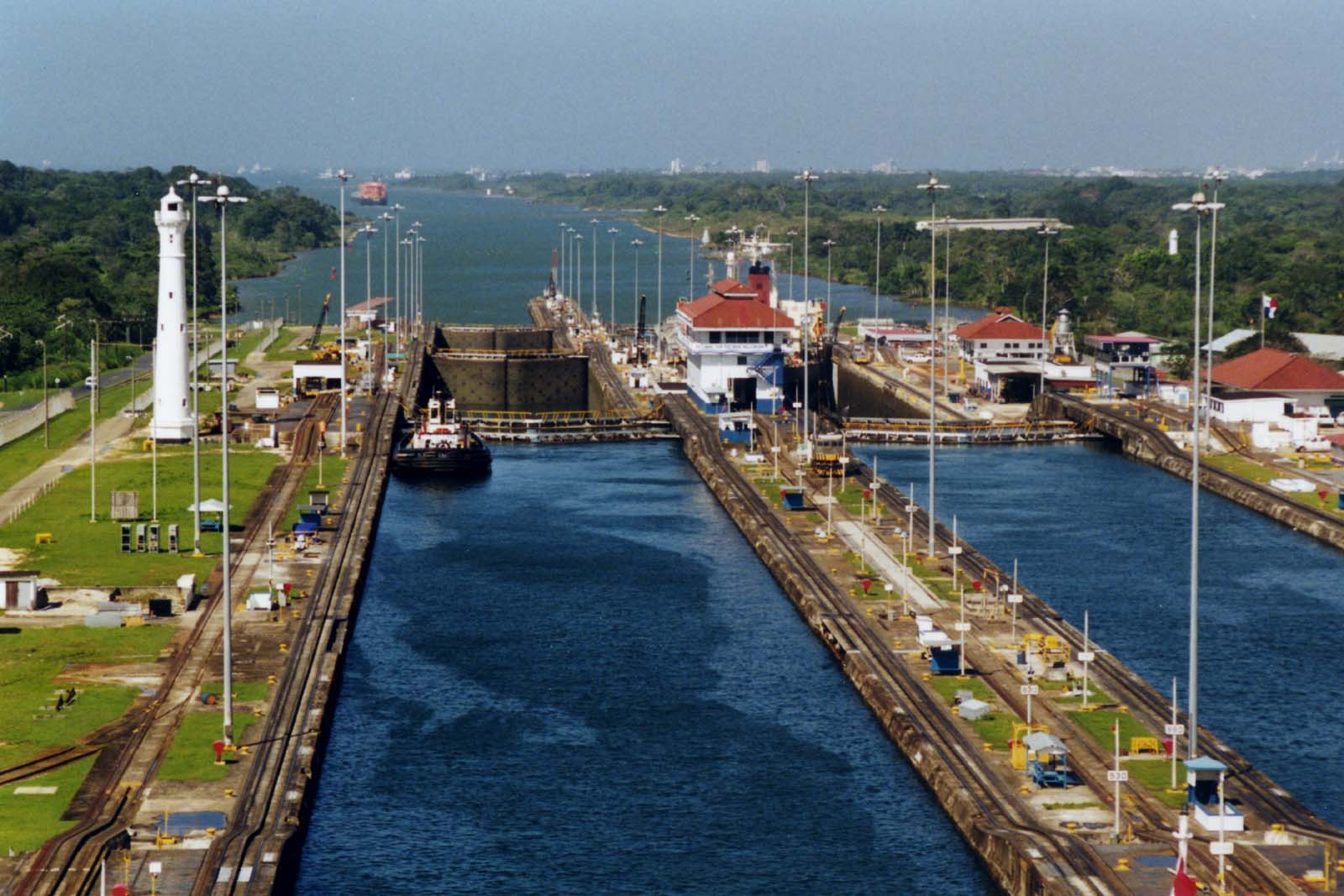
Image credit: Stan Shebs / Wikimedia Commons / CC BY-SA 3.0
What it's about?
The attempted sale of CK Hutchison’s Panama Canal operations to the US-based company BlackRock and Terminal Investment Limited was more than a commercial transaction. When Beijing publicly opposed the deal, branding it a betrayal of national interests, it transformed into a case study in how global business is being reshaped by strategic rivalry.
The controversy illustrates a deeper question: Can Hong Kong’s leading conglomerates still operate on commercial logic alone? Or are they inevitably drawn into the geopolitical contest between the United States and China? For Hutchison, the Panama case shows that the room for neutrality is shrinking.
Why it matters
Beijing’s intervention signals to Hong Kong businesses and foreign investors alike that commercial neutrality is no longer assured. Loyalty, alignment and political sacrifice are emerging as expectations alongside profit and efficiency. For global decision-makers, this raises two critical issues:
Why Hutchison sold Panama Canal?
CK Hutchison has steadily repositioned itself around two “twin engines”, i.e. real estate in Asia and infrastructure in Europe. While ports in Latin America once fit into its global footprint, they were never central to this model. By selling its Panama Canal operations, Hutchison freed resources to consolidate strengths where it sees long-term stability and growth over the past decade: acquiring the German infrastructure firm ISTA in 2017 and merging Vodafone UK and Hutchison’s subsidiary Three with £11 billion. Capitals are concentrated in Europe’s regulated infrastructure to satisfy the Asia’s high-demand property markets. This reflects a clear shift in Hutchison toward reinforcing European operations and securing more predictable cash flows.
This suggests that Hutchison is scaling back its exposure to politically uncertain markets and gradually exiting those regions, while reallocating capital toward higher-yielding and more strategically aligned assets alongside a deeper commitment to Asian real estate. For governments and investors, this indicates that Hong Kong conglomerates are not stepping back from globalization, but rather recalibrating their portfolios toward safer assets with clearer returns.
The divestment also reflected classic Hutchison discipline: Buying early and exiting when valuations reach the peak. As global demand for strategic infrastructure continues to rise, the Panama Canal assets were sold at a premium. The HK$19 billion in proceeds and the subsequent rise in the share price reflected the strong investor confidence. This sale aligns with Hutchison’s long-standing practice of repositioning its portfolio, when market conditions are favourable. The divestment strengthened the group’s balance sheet and cash reserves, while preserving flexibility for reinvestment or returns to shareholders.
To policymakers, Strategic nodes like the Panama Canal are no longer just trade arteries but high-value commodities in global capital markets. Governments must therefore view divestments not only as corporate decisions but as moves that can shift control of strategic assets between geopolitical actors.
The strategic significance of Panama Canal and the Chinese ownership on the potential dual-use nature of port terminals inevitably drew scrutiny in Washington. U.S. allies have tightened the screening of Chinese-linked infrastructure deals and the EU’s 2019 FDI framework explicitly flagged ports as areas requiring “special oversight”. In this environment, Hutchison avoids being labelled a “Chinese state-backed actor.”
Hutchison has taken deliberate steps to present itself as a neutral and commercially driven multinational investor, rather than an extension of Chinese state policy. The company restructured in 2015 to a Cayman Islands base carefully positioning itself apart from state-linked Chinese enterprises, which creates an international legal identity rather than retaining a mainland Chinese or Hong Kong corporate domicile. To Hutchison, exiting Panama reduced exposure to intensifying U.S.- China rivalry at one of the world’s most strategic trade chokepoints.
For European and U.S. decision-makers, Hutchison’s move signals how Hong Kong firms navigate geopolitical pressure. Chinese-origin conglomerates may prefer retreat to avoid being entangled in state rivalries. Hutchison pre-emptively mitigated the risk of being labelled a “Chinese state proxy” in a critical geopolitical theatre. This move not only alleviated Western concerns about Hutchison’s control of Panama’s ports, but also preserved the group’s ability to operate in Western markets without being constrained by the perceptions of “Chinese capital.” To Beijing, it risks weakening China’s global port footprint, revealing a growing divergence between Hong Kong firms’ commercial logic and China’s strategic ambitions.
Why Beijing intervened?
The Panama Canal is among the world’s most critical maritime chokepoints and control of its ports carries weight far beyond commerce. Investment in Latin American terminals has been part of a wider strategy to shape global shipping routes and enhance strategic reach.
The CK Hutchison’s divestment was more than a business transaction. It was a strategic setback. The transfer of control to U.S.-linked interests was seen as a symbolic “recapture” of the terminals, which weakens the China’s presence at a vital corridor. This Port had been regarded as potential bargaining leverage in trade negotiations with Washington. Chinese views overseas facilities as instruments of geopolitical positioning rather than purely commercial assets. But this loss reduced Beijing’s diplomatic leverage in a time of rising frictions. Under this circumstances, the Hutchison’s decision highlights not all Chinese-affiliated enterprises operate in alignment with the Beijing objectives.
The Panama case exposed the limits of relying on Hong Kong conglomerates to advance strategic interests in overseas. It signalled two parallel developments: The China’s heightened sensitivity to divestments in politically contested regions; and the growing tension between corporate autonomy and state geopolitical expectations.
In the Panama Canal divestment, Beijing’s leadership reacted strongly against CK Hutchison’s “transaction first, then approval” approach. Beijing expressed dissatisfaction and even instructed state-owned enterprises to suspend new collaborations with the Li family, who serve as the controlling shareholders and principal decision-makers of Hutchison. Hutchison defended this sale as a “purely commercial and competitive process”. In the context of Sino U.S. rivalry, this business autonomy was no longer acceptable. The regulatory scrutiny and political interference slowed down the negotiations and disrupted the original planned transaction. In strategic sensitive areas, Beijing expects Hong Kong firms’ business decisions to align with national priorities, which in practice leaves a little scope for neutrality to firms. This marks a fundamental shift in the operating environment as leading Hong Kong conglomerates are more closely to state interests and their room for independent strategic choice have been narrowed. Beijing is extending political oversight into commercial domains once seen as autonomous. Hong Kong enterprises face increasing limits on their ability to separate business logic from state loyalty, particularly where Sino-U.S. rivalry is at stake.
The political reaction extended beyond official statements. Pro-Beijing media condemned this business deal as disloyal to China, framing it as a matter of national glory. When these narratives were recognized by the Hong Kong and Macao Affairs Office of the State Council, which is the Beijing central body responsible for overseeing Hong Kong and Macao affairs, these narratives acquired a quasi-official status and exerted tangible pressure on both Hutchison and other Hong Kong firms. This discourse resonated beyond China. By shaping the terms of debate, Beijing positioned itself to argue for greater balance and competition in Panama’s port operations. The episode illustrates how domestic media pressure can spill over into international positioning. What begins as a reputational discipline at home can evolve into bargaining leverage abroad, particularly in regions where infrastructure and geopolitics are closely intertwined.
Conclusion: Beijing’s Strategic Signal
Looking ahead, Beijing’s intervention should be read as a strategic signal. Its aims to prevent the consolidation of Western control at a vital chokepoint and embed Chinese capital further deeply in Latin America’s strategic infrastructure. At the same time, Hong Kong conglomerates that commercial logic alone is no longer sufficient in the sensitive geopolitical contexts. The Panama case demonstrates how commercial disputes can be absorbed into statecraft, turning regulatory action, public discourse, diplomatic positioning and commercial strategy into instruments of strategic influence. China’s objective is not an episodic control, but a structural adjustment to preserve its influence and reshape the regional order to its advantage.
From Neutrality to National Loyalty
As U.S. China tensions intensify, many multinational firms pursue de-risking strategies: not full decoupling as it is economically unviable, but carefully calibrated ambiguity that allows them to operate in both markets without explicit political commitments. This balancing act is becoming harder in Hong Kong. Since 1997, the influx of mainland state-linked enterprises has blurred the line between state and market. Benefiting from the “One Country, Two Systems” framework, Hong Kong conglomerates have increasingly internalised the political expectations as part of their operating business norms. Ties to the National People’s Congress or the Chinese People’s Political Consultative Conference have grown in relevance in Hong Kong. And particularly since 2019, Beijing has intertwined economic incentives with the political expectations to link with the political goal of “national rejuvenation.”
The result is a growing convergence of economic and political expectations. Commercial autonomy is increasingly contingent on political alignment, eroding the distinction between business logic and ideological loyalty. For investors and firms, this raises strategic concerns:
The space for Hong Kong conglomerates to maintain commercial neutrality is narrowing. The rise of a nationalist business paradigm means companies must increasingly balance political conformity with economic self-interest. Two scenarios are emerging:
This Panama case may prove a turning point. For decades, Hong Kong’s strength lay in maintaining a clear distinction between market logic and state power. But this distinction is becoming harder to sustain. How the city navigates this shift will shape its credibility as a financial hub and influence how companies adapt to a more politicized era of global infrastructure.

Wallace Loo is a recent graduate from the Diplomatic Academy of Vienna and the University of Vienna. He holds a Master of Advanced International Studies (MAIS). He specializes in East and Southeast Asian affairs, with a focus on the intersection of geopolitics, law and economic strategy. His work examines China’s use of legal and economic instruments to shape regional order, the South China Sea disputes and Hong Kong’s evolving international position.
In this article, Aniello Iannone critically evaluates the ten-year trajectory...
The global order is moving beyond rigid bloc politics toward...
In this article, Luo Chen Jun highlights a striking historical...
In this article, Muhamad Ferdy Firmansyah highlights how climate technology...
In his latest article, Aniello Iannone examines the gap between...
This article analyzes Indonesia's ambitious military modernization through its strategic...
DeepRare is being hailed as a major breakthrough in the...
This article analyzes President Prabowo’s decision to skip the June...
This article analyzes the phenomenon of "sibling rivalry" at the...
This article evaluates the normative frameworks offered by China’s four...
This article examines the 2025 Thailand–Cambodia border conflict to evaluate...
This article examines the May 2026 ASEAN Summit in Cebu...
This article examines the May 2026 Beijing summit between Xi...
This article examines how the rise of narcissistic foreign policy—exemplified...
In October 2025, Indonesia's President Prabowo Subianto announced that Portuguese...
This article argues that recent U.S.–Israel military actions against Iran...
This article examines Türkiye’s evolving "Third Way" in Africa, an...
This article critically examines Indonesia’s evolving role from a quiet...
This article provides a firsthand account of how Pakistan emerged...
This article examines how disruptions in the Strait of Hormuz...
This article examines Indonesia’s participation in the Board of Peace...
This article examines what the attempted sale of CK Hutchison's...
This article examines the Kudankulam Nuclear Power Plant as a...
This article examines Nepal’s strategic position within the Indo-Pacific and...




Leave A Comment