
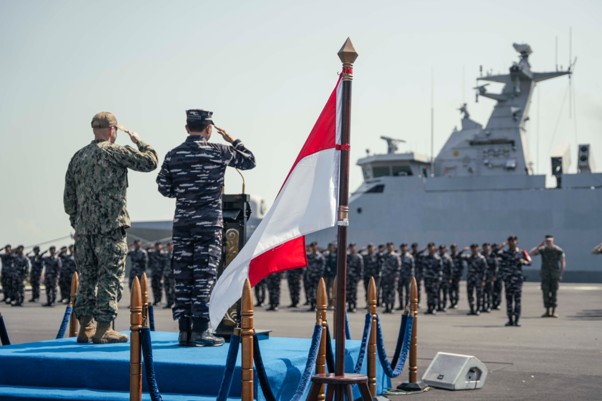
U.S. and Indonesian naval officials attend the opening ceremony of CARAT Indonesia 2025 at the Indonesian Navy headquarters in Surabaya, June 23, 2025. Source: U.S. Pacific Fleet – CARAT Indonesia 2025
When Indonesia signs a new defence agreement with Australia or explores frigate and submarine offers from Japan, the headlines usually focus on the hardware. Yet the more important story is not what Indonesia is buying, but how these choices are being read by its neighbours and by major powers. Southeast Asia’s largest state is quietly changing the way others imagine the region’s balance of power: as a place where Indonesia aims to deter coercion and increase its leverage, while still insisting it belongs to no camp.
Indonesia’s leaders describe their posture as “independent and active” and emphasise that defence modernisation is defensive and overdue. That is true. But the scale, type, and diplomatic framing of recent arms imports and defence agreements send signals that go well beyond catching up on old kit. In the past five years alone, Jakarta has signed contracts for new fighter jet types, a new class of submarines, several classes of frigates, a tactical ballistic missile system, and two air defence systems, diversifying suppliers from the United States and Europe to Turkey and others. For Southeast Asian neighbours, a more capable Indonesia is both reassuring and unsettling. For China, the United States, and Japan, Indonesia’s moves are clues to how Jakarta might behave in a crisis, and whether it can still be treated as a neutral bystander.
Indonesia’s defence policy is no longer just about safeguarding its own vast territory and sea lanes. It is becoming a barometer of how regional security might evolve in a sharper era of great‑power competition.
Over the past decade, Indonesia has moved from incremental upgrades to a more ambitious modernisation drive. Instead of simply replacing ageing platforms one‑for‑one, Jakarta has shown sustained interest in capabilities that extend its reach and tighten its links with partners.
On the hardware side, Indonesia has pursued modern combat aircraft, air‑to‑air and anti‑ship missiles, submarines, frigates, and layered air defence. It has ordered French Rafale fighters and have trying to buy 36 US F‑15EX aircraft, a step that US Air Force analysts describe as a major leap in the bilateral security partnership and in turning the Indonesian Air Force into a “regionally strategic force.” According to analysis by the Australian Strategic Policy Institute (ASPI), contracts in just the past few years cover two new fighter types, one new class of submarines, three classes of frigates, a tactical ballistic missile system, and two air defence systems. The particular model numbers matter less than what they enable: longer‑range surveillance, more credible control over its airspace and maritime approaches, and the ability to complicate the calculations of any state considering coercion near Indonesian waters.
These acquisitions sit alongside investments in maritime patrol aircraft, coastal radar, and other tools that improve maritime domain awareness. In plain terms, Indonesia is trying to see and respond to events further from its shores, for longer, and with more options at hand. For a country that spans key sea lanes between the Indian and Pacific Oceans, this is not a luxury; it is a strategic necessity.
Yet Jakarta is attempting this modernisation on a tight budget. Indonesia’s defence allocation for 2026 is about 187.1 trillion rupiah (roughly A$17 billion), equivalent to around 0.8 per cent of GDP, well below the global average and below many regional peers. Much of this goes to salaries and routine costs, leaving limited room for new kit. That gap between ambition and resources makes Indonesia especially sensitive to partnerships, credit terms, and technology‑transfer offers.
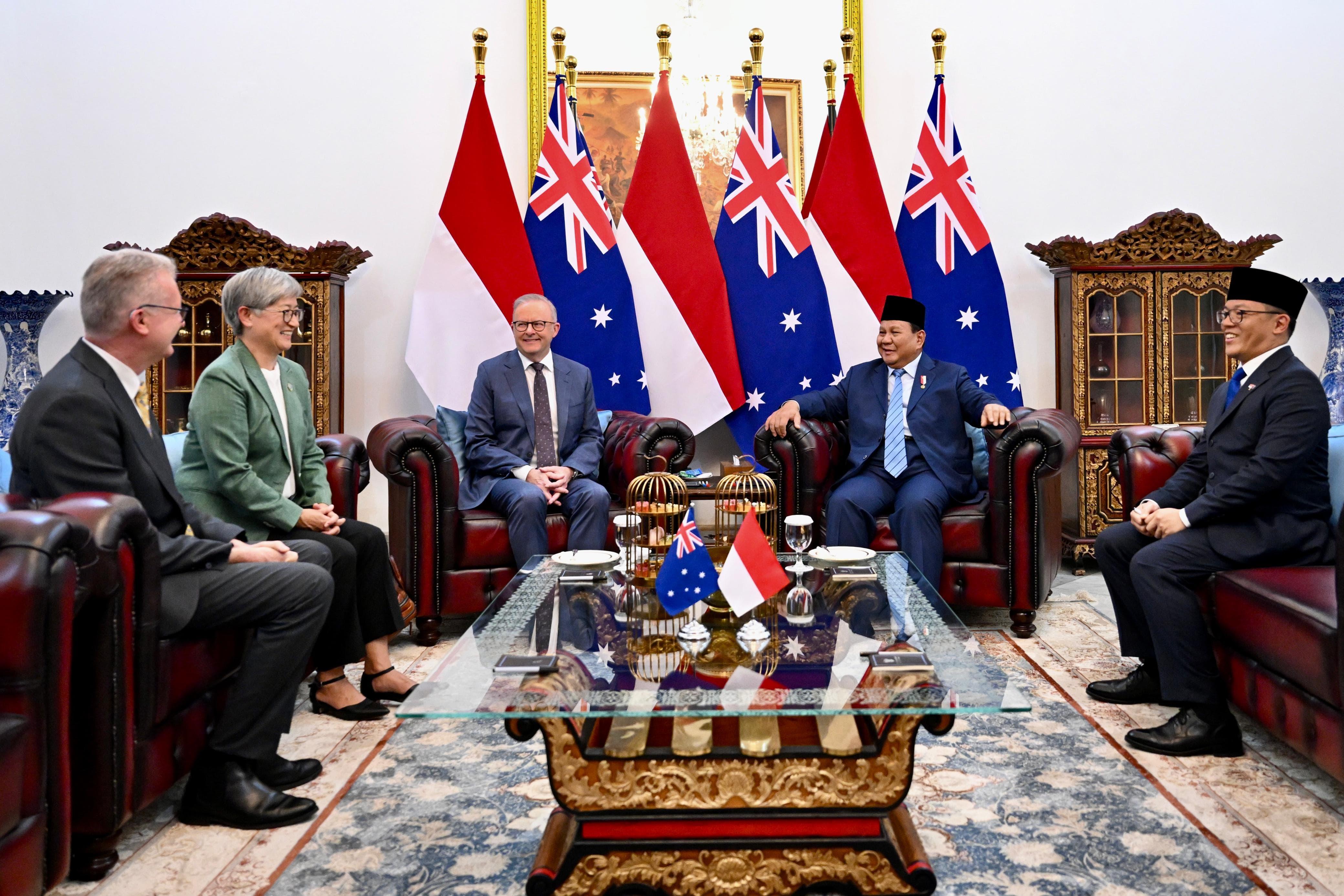
On the diplomatic side, Indonesia has woven a thicker web of defence agreements. With Australia, Jakarta signed a new Defence Cooperation Agreement (DCA) in August 2024 that creates a legal framework for deeper exercises, training, and joint activities, enabling what Canberra describes as “the largest combined joint activity in recent history” under Exercise Keris Woomera. The two governments’ 2025–2029 Plan of Action for their Comprehensive Strategic Partnership commits them to “enhance practical exchanges” through regular dialogues, exercises, and port calls, and to fully implement the DCA. A subsequent “Jakarta Treaty” on common security, signed in 2026, has been described as shifting the relationship from functional cooperation to deeper strategic alignment while still preserving both countries’ autonomy.
Ties with the United States have also deepened. In 2023, the two countries elevated their relationship to a Comprehensive Strategic Partnership, expanding defence cooperation and institutionalising large exercises such as Garuda Shield; the F‑15EX deal sits within this broader security agenda. Indonesia has at the same time pursued new arrangements with Japan, including an agreement on the transfer of defence equipment and technology and, more recently, a wider defence cooperation arrangement that opens the door to equipment and technology partnerships and potential transfers of Mogami‑class frigates and submarines.
Seen in isolation, each arms deal or agreement can be explained away as routine: replacing obsolete kit, accessing training opportunities, or supporting humanitarian and disaster relief. Seen together, however, a pattern emerges: Indonesia is building capabilities that extend its reach and its options, and it is doing so in ways that tie it more closely, though not exclusively, to like‑minded maritime powers.
For many Southeast Asian states, a more capable Indonesia is a double‑edged development.
On the reassuring side, Indonesia’s modernisation can be seen as a contribution to regional stability. Stronger maritime surveillance and air capabilities can support broader efforts to uphold freedom of navigation, crack down on piracy, and respond to natural disasters, missions Jakarta and Canberra explicitly highlight in their plan of action and defence cooperation documents. When Indonesia invests in such public goods, neighbours gain an extra layer of protection, without having to shoulder all the costs themselves.
Indonesia’s formal commitment to ASEAN centrality, its Lombok Treaty with Australia, and its reluctance to join overtly anti‑China blocs also help limit alarm. For states that fear becoming mere pawns in a US–China contest, a stronger Indonesia that still jealously guards its strategic autonomy can be a useful counterweight.
Yet unease persists, even if it is voiced carefully. Historical memories of Indonesian dominance, whether diplomatic, demographic, or military, have not vanished. And as one ASPI analysis of the new DCA notes, allowing more extensive military drills and mutual force operations on each other’s territory is a major step for Indonesia, with implications that its neighbours will watch closely. Some worry that, over the long term, steadily improving Indonesian capabilities could tilt the regional balance in ways that leave them more exposed, especially where land or maritime boundaries remain unresolved.
There is also anxiety about ambiguity. Many of the systems Indonesia is pursuing are described as defensive. In practice, almost any modern platform can be used for a range of missions, from constabulary tasks to power projection. When Jakarta buys longer‑range platforms and strike‑capable systems but keeps its doctrine vague, neighbours are left to infer intent from incomplete information.
Finally, as Indonesia’s capabilities grow, so do expectations. Other ASEAN states and Australia increasingly look to Jakarta to take the lead in crises, from maritime run‑ins with foreign vessels to new minilateral groupings that might reshape regional order. If Indonesia appears unwilling to match its growing means with visible leadership, some partners may interpret this as hedging or indecision, potentially eroding trust.
If neighbours are recalibrating their views of Indonesia, so too are the major powers. Each reads Jakarta’s moves through its own strategic lens.
For China, Indonesian modernisation is a mixed message. On one hand, Indonesia has not joined US‑led alliances or openly backed bloc politics. It stresses the importance of economic ties and maintains channels with Beijing. On the other hand, capabilities that improve Indonesia’s ability to monitor and defend its waters, especially near resource‑rich areas and busy straits, complicate Chinese operations and grey‑zone tactics. Offers of Japanese frigates and submarines, facilitated by Tokyo’s loosening of its arms‑export rules, will look in Beijing like one more step in a slowly tightening ring of capable maritime states around the South China Sea.
Beijing also watches Indonesia’s defence links with Japan, Australia, and the United States. Training, exercises, and technology cooperation with these countries may fall short of alliance commitments, but they still enhance interoperability and send a signal: Indonesia does not intend to face future contingencies alone. For Chinese strategists, that makes Indonesia less predictable as a neutral space and more likely to factor into any serious planning for contingencies in the broader Indo‑Pacific.
The United States, by contrast, tends to see opportunity. A more capable Indonesia can help share the burden of maintaining a stable maritime order. Joint exercises and arms sales reinforce habits of cooperation and create political stakes in the relationship. The F‑15EX sale and ongoing work on information‑sharing agreements such as a General Security of Military Information Agreement (GSOMIA) are designed to pull Indonesia closer into a US‑centred network of partners, even without a formal alliance. From Washington’s perspective, submarines, maritime patrol aircraft, and modern fighters in Indonesian hands all make it harder for China to operate uncontested in key sea lanes.
Yet the picture is not entirely comforting. American officials also grapple with Indonesia’s insistence on non‑alignment and its reluctance to take clear positions on some of China’s most assertive actions. Analysts note that Jakarta is using bilateral arrangements, such as the DCA with Australia, as part of a broader hedging strategy that strengthens its position without committing it firmly to “the West.” The risk, from Washington’s view, is that Indonesia’s growing capabilities may not translate into predictable support in a crisis, especially if domestic politics or economic ties with China pull in a different direction.
Japan, and to some extent Australia, approach Indonesia as both a security partner and a potential anchor of a more resilient regional order. Tokyo’s willingness to negotiate equipment and technology partnerships, and to float offers of Mogami‑class frigates and submarines, reflects its own shift toward a more proactive security role and its search for trusted partners in maritime Southeast Asia. For Japan, a stronger Indonesia is part of a wider network of states that can collectively uphold a “free and open” regional environment without replicating Cold War‑style blocs.
At the same time, Japanese and Australian policymakers are sensitive to Indonesia’s strong nationalism and its deep attachment to strategic autonomy. They welcome defence cooperation, but they also recognise that Jakarta may keep them at arm’s length when interests diverge. In their eyes, Indonesia is a vital partner, but not a fully predictable one.
Indonesia’s leaders often frame defence policy as a largely domestic matter: a question of budgets, force structure, and internal priorities. But as its modernisation gathers pace, it is increasingly entangled in what might be called a perception–policy feedback loop.
Defence choices shape how others see Indonesia’s role in the region. Those perceptions, in turn, influence which technologies partners are willing to share, how much political support they offer Jakarta’s diplomatic initiatives, and how they plan for emergencies that might involve Indonesian territory or waters. Misunderstandings on either side can create friction, fuel arms racing, or weaken the very autonomy Indonesia is trying to protect.
To navigate this loop, Indonesia will need to do three things.
First, clarify defensive intent without surrendering flexibility. Jakarta does not need to publish a detailed warfighting doctrine. But it could more clearly explain the broad purposes of its new capabilities: maritime surveillance, territorial defence, support to regional stability, while signalling that it does not seek coercive leverage over its neighbours. Such messaging would not bind Indonesia to anyone’s camp, but it would narrow the space for worst‑case assumptions.
Second, invest in transparency and reassurance with neighbours. Regular briefings to ASEAN partners and Australia on major acquisitions, exercises, and doctrinal shifts would help calm nerves. So would greater involvement of Indonesia’s new capabilities in cooperative missions such as search and rescue, humanitarian assistance, and anti‑piracy, where benefits to the wider region are visible and tangible.
Third, align modernisation with a clearer vision of regional leadership. If Indonesia’s capabilities grow while its diplomacy remains overly cautious, others will continue to project their own hopes and fears onto Jakarta’s choices. By articulating a more explicit vision of how it wants Southeast Asia to handle great‑power rivalry, crisis management, and emerging minilateral arrangements, Indonesia can turn its new military weight into political capital rather than suspicion.
Ultimately, defence modernisation is not only about weapons or alliances. It is about the stories that others tell themselves when they see a state buying, training, and signing. If Indonesia wants to be seen as a guardian of Southeast Asia’s stability rather than just another rising power, how it explains its new tools may matter almost as much as what it chooses to buy.

Iqbal Saputra is an independent researcher whose work focuses on international relations, international political economy, and geopolitical dynamics. He holds a Bachelor’s degree in Political Science, majoring in International Relations, from Universitas Muhammadiyah Yogyakarta (UMY), Indonesia. His academic interests include ASEAN Studies, Southeast Asian security, Indo-Pacific geopolitics, Indonesian foreign policy, and strategic studies.
Indonesia’s ambitious defence modernisation is reshaping how Southeast Asia and...
Aniello Iannone examines Malaysia's repatriation of Myanmar nationals, revealing how...
In this article, Dr. Angana Guha Roy argues that water...
In "Structural Aseanisation," Aniello Ianone explores Europe's strategic shift in...
In this article, Aniello Iannone critically evaluates the ten-year trajectory...
The global order is moving beyond rigid bloc politics toward...
In this article, Luo Chen Jun highlights a striking historical...
In this article, Muhamad Ferdy Firmansyah highlights how climate technology...
In his latest article, Aniello Iannone examines the gap between...
This article analyzes Indonesia's ambitious military modernization through its strategic...
DeepRare is being hailed as a major breakthrough in the...
This article analyzes President Prabowo’s decision to skip the June...
This article analyzes the phenomenon of "sibling rivalry" at the...
This article evaluates the normative frameworks offered by China’s four...
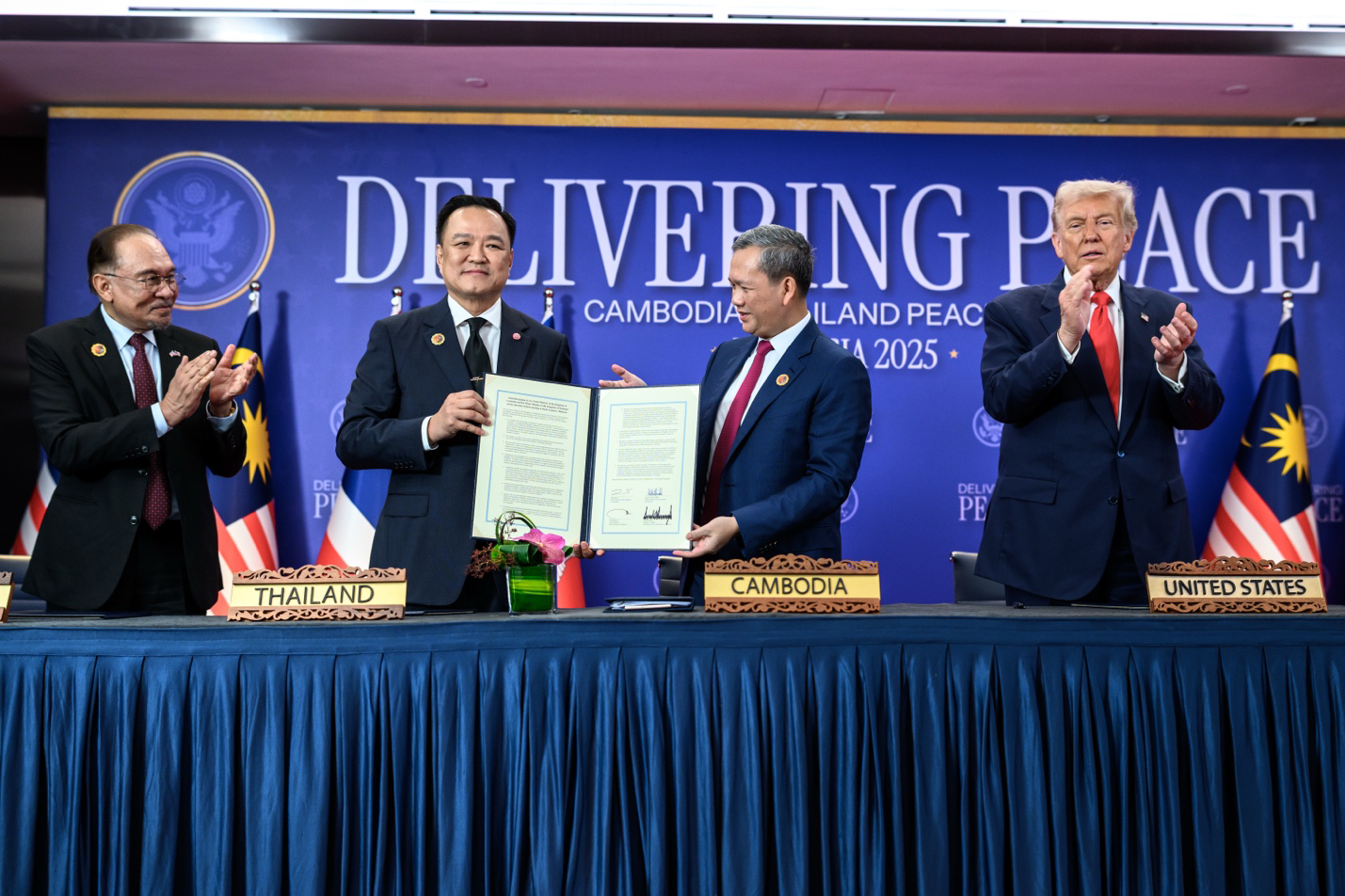
This article examines the 2025 Thailand–Cambodia border conflict to evaluate...
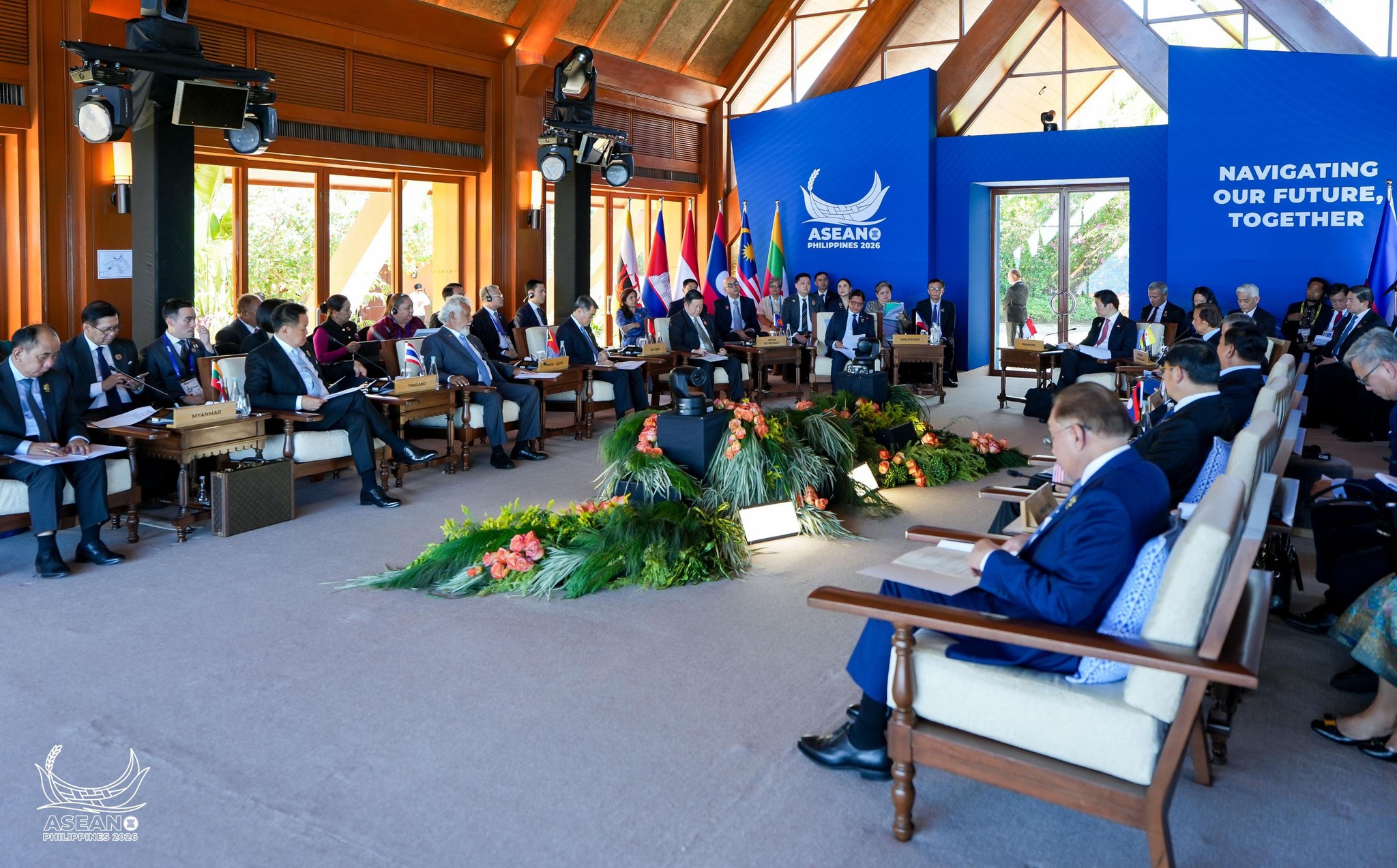
This article examines the May 2026 ASEAN Summit in Cebu...
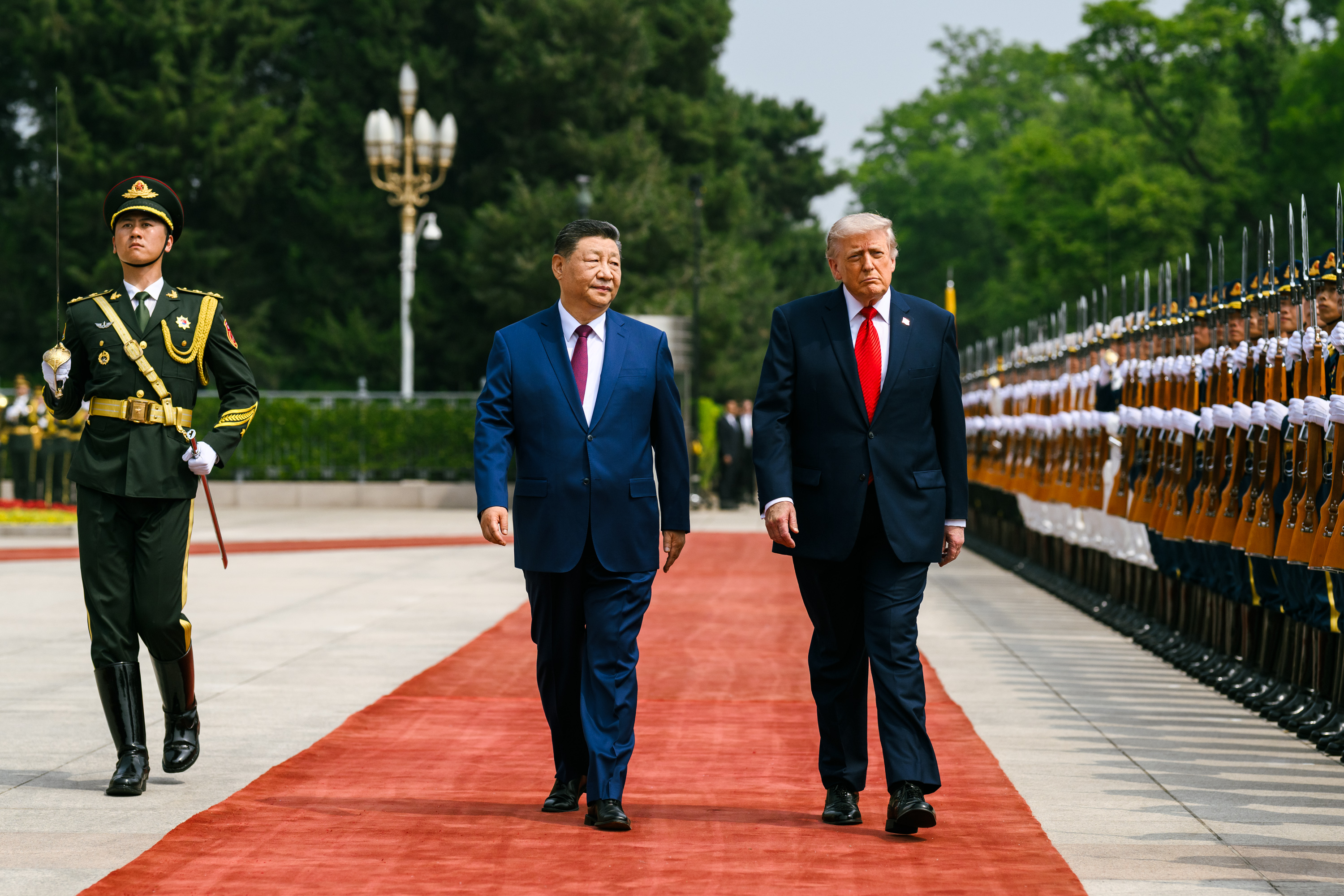
This article examines the May 2026 Beijing summit between Xi...
This article examines how the rise of narcissistic foreign policy—exemplified...
In October 2025, Indonesia's President Prabowo Subianto announced that Portuguese...
This article argues that recent U.S.–Israel military actions against Iran...
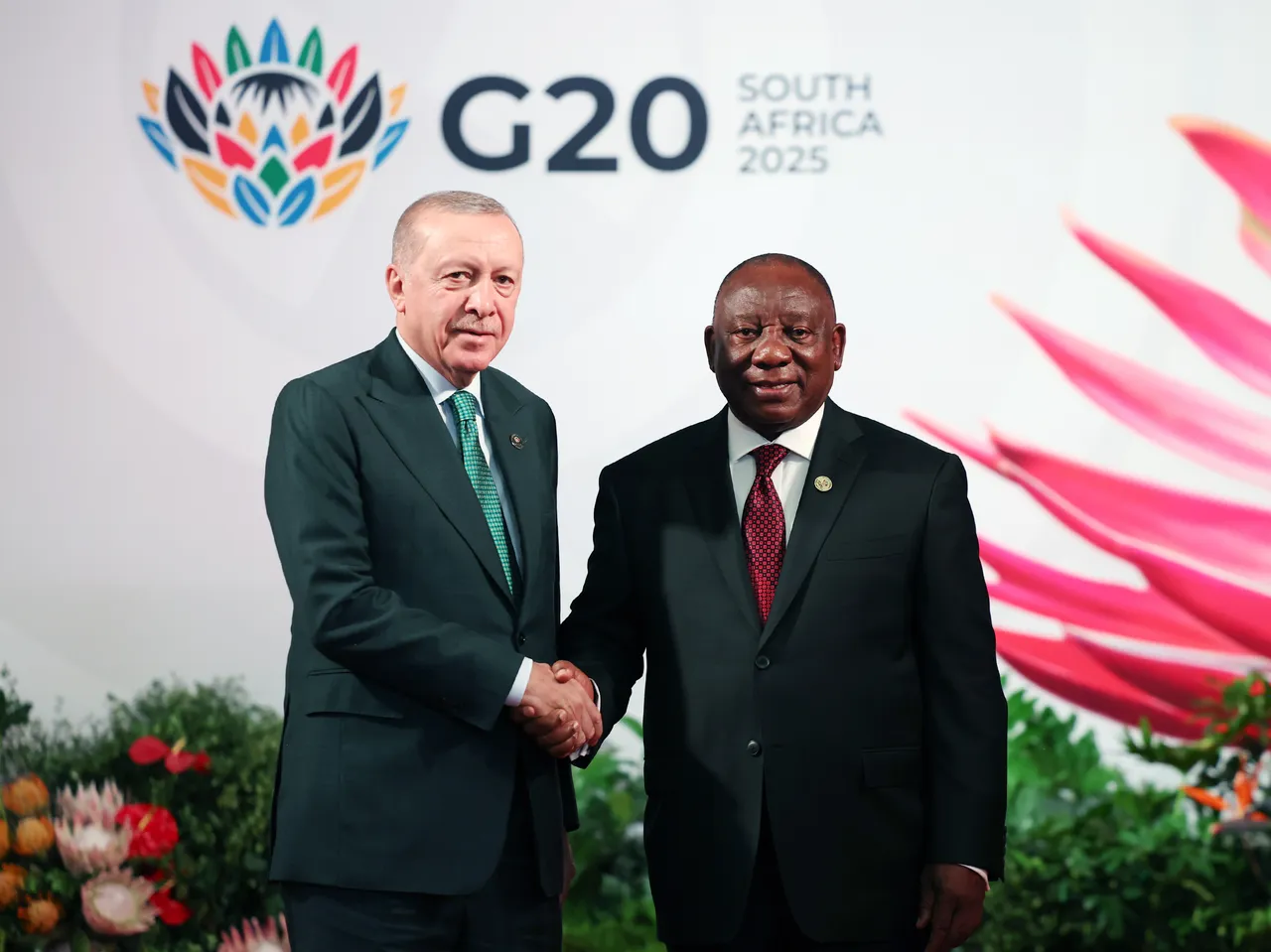
This article examines Türkiye’s evolving "Third Way" in Africa, an...
This article critically examines Indonesia’s evolving role from a quiet...
This article provides a firsthand account of how Pakistan emerged...
This article examines how disruptions in the Strait of Hormuz...





Leave A Comment