
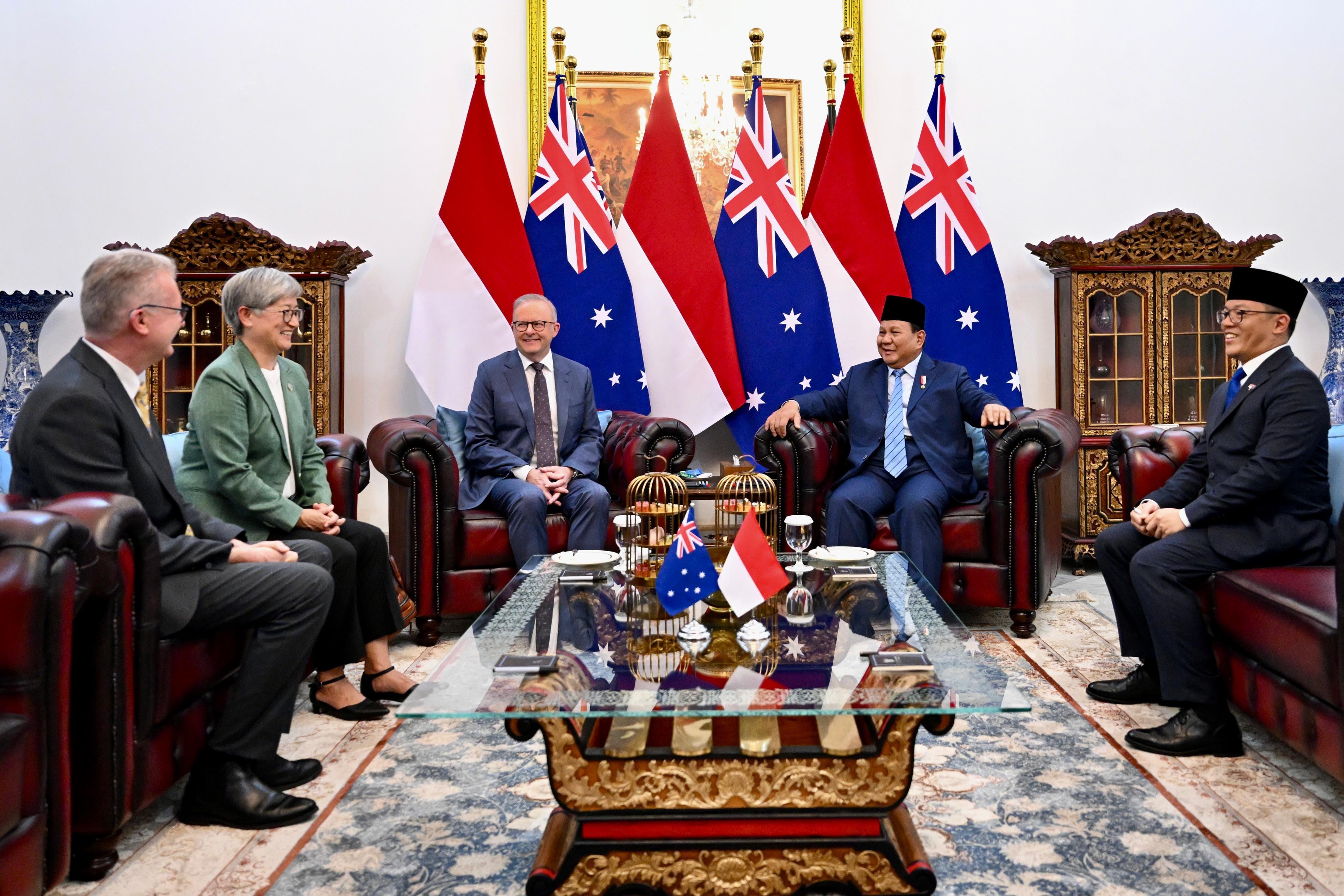
Image Credit: President Prabowo Subianto and PM Anthony Albanese. Open access for public by Sekretariat Negara Republik Indonesia, for educational purposes.
Why Indonesia’s strategic autonomy goes unrecognized Indonesia is transforming from a quiet diplomat into a "status-affirming" middle power, using proactive hedging to secure strategic autonomy in a multipolar world. By reviving the "Bandung Spirit," Jakarta can lead a global coalition of middle powers to restrain major-power conflict and build a more equitable international order.
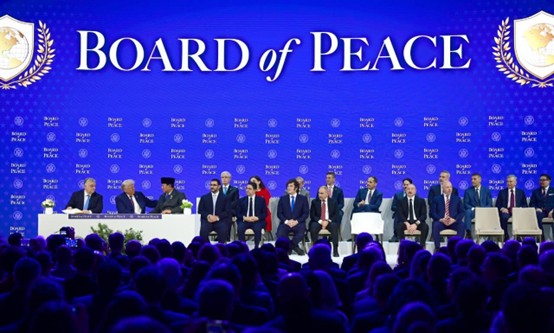
Lately, Indonesia’s foreign policy has faced waves of criticism, as well as cautious praise, from intellectual figures, religious institutions and Islamic parties following its participation in the United States President Donald Trump-led Board of Peace (BoP). Critics argue that by joining the BoP, Indonesia is abandoning its traditional bebas aktif (independent and active) foreign policy and aligning itself with a pro-US bloc. They contend this move results in unnecessary spending, leads to trade agreements that favor the US over Indonesia and alienates the nation from its historical role in defending Palestinian rights in the struggle for an internationally recognized independent state.
Historically, the decolonization era of President Sukarno was a defining phenomenon for the non-Western world; during that period, the Palestinian issue was supported through both clear political and ideological frameworks. Nevertheless, despite this cloud of criticism, Indonesia’s enrolment in the BoP has received pragmatic scholarly evaluation. For instance, Moch. Faisal Karim of the Indonesian International Islamic University (UIII), has acknowledged the rational frustration regarding the isolation of Palestinians in discussions about their future. However, he notes that Indonesia’s participation in such global gatherings is primarily about gaining strategic flexibility. Indonesia’s stated willingness to withdraw if Palestinian demands are not fulfilled, and President Prabowo Subianto’s recent call to halt membership in the BoP if the war on Iran continues, are clear indications of its middle-power positioning. These are status-affirming actions: a demand for advanced recognition in the international arena conceptualized through the conduct of proactive hedging.
Ambitious middle powers like Indonesia must be ready to take actions that serve their national interests and deliver the strategic autonomy necessary for a status-affirming stance on the global stage. Indonesia has previously succeeded in moving closer to the BRICS founding nations, showcasing a strategic move beneficial for diversifying its economy while refraining from joining any specific bloc. Simultaneously, it has signed a strategic partnership with Australia to cooperate in military and security domains. In my view, such an independent and active foreign policy stands between passive neutrality and active assertiveness. Indonesia’s signature policy is, in fact, performed through this proactive hedging. Indonesia’s emphasis on foreign policy indicates its willingness to use a status-affirming strategy to guarantee strategic autonomy. This is not merely a reaction to major-power competition, risk management, or global uncertainty. Instead, Indonesia, alongside other middle and small states, is seeking its "place under the sun" amid a post-US global order and the emergence of a multipolar world where China’s and Russia’s roles in geopolitics have advanced in both economic and political influence.
Consequently, middle-power countries today are asserting their individuality in international relations rather than acting as sub-structural actors influenced by the decisions of major powers. In this regard, the participation of Indonesia and other middle powers is essential in preventing the US from making unilateral decisions to reshape the world order. For example, Indonesia’s announcement regarding a potential withdrawal, and its current remarks on halting membership in response to tensions involving Iran, indicate its ability to conduct proactive hedging. It sees itself in a position where middle powers can show resistance to major-power actions, rather than functioning solely out of a fear of uncertainty.
Indonesia is seeking to guarantee strategic autonomy in international diplomacy by showcasing status affirmation to be treated as an equal by major powers. Criticism of Indonesia’s decision to join the BoP has often triggered emotional reactions, especially due to staunch rejection from Islamic factions. These groups often apply a religious lens to every condition concerning Palestine, while the Palestinian cause is a matter of self-determination and the right of the people to declare a nation-state. Furthermore, Indonesia’s active participation in global events signals its desire for "advanced recognition", a motive of status affirmation rather than simple status seeking. As a middle power in a multipolar world, Indonesia has achieved a condition where its foreign policy is not dictated by US-China competition. Scholars such as Arifianto and Raditio have acknowledged the possibility of seeing Indonesia as an initiator of a "third way". While some present this as a reaction to major powers, it is better viewed as an evolution of the "independent and active" principle suggested by founding father Mohammad Hatta. In Hatta’s time, Indonesia’s independence was newly won, the national ideology of Pancasila was not yet fully established, and the economy was fragile.
Today, with its significant economic capabilities, its leadership role within ASEAN, its success in resolving ethnic and religious conflicts, and its model of religious moderation, Indonesia’s middle-power status must be treated more seriously. Currently, although sometimes "invisible" in traditional Western policy circles, Indonesia has moved from a status-seeking position to a status-affirming one through global participation and alignment without formal alliance. Its position could become even more influential if a coalition of middle powers were established as a guarantor of global peace, a coalition that resists major powers escalating toward a "World War III" scenario or nuclear conflict. The rise of a Bandung Plus model is not a utopian scenario. This is particularly true given the willingness of Global North middle powers, such as Canada, to participate in a global order that allows for equal status and strategic autonomy.
An alignment between Global South and Global North middle powers is a prerequisite for preserving a world order supportive of equal rights and development. Indonesia and Canada are capable of orchestrating this emergence by reviving the "Bandung Spirit" and shifting the psychology of alignment toward a global coalition under the notion of Bandung Plus. Without such a coalition, middle-power expectations and proactive hedging may remain merely symbolic. For instance, rather than Indonesia’s unanswered calls to mediate between the US and Iran, a coalition of middle powers could exert collective pressure to end conflicts and prevent escalation in regions like the Gulf or the South Caucasus. Major powers like China might even support such a coalition to limit US ambitions, while the US may eventually accept the need for neutral third-path actors following rising global outrage against interventionist foreign policies.
Finally, the middle-power concept will be taken seriously only if it moves beyond a desire for equal treatment and becomes a multilateral structural force that major powers must consider. As noted by Rizal Sukma, the urgency to "build the world anew", as Sukarno once called for, is starting to take shape through status-affirming actions. This is an opportunity that middle and small powers previously lost during the era of individual negotiations and trade wars. By forming a global coalition, these nations can finally prevent individual major-power decisions from destabilizing the entire global community
This article was published in thejakartapost.com read: https://www.thejakartapost.com/opinion/2026/03/26/why-indonesias-strategic-autonomy-goes-unrecognized.html.

Ararat Kostanian is a doctoral candidate at the Faculty of Social Sciences, Indonesian International Islamic University.
In "Structural Aseanisation," Aniello Ianone explores Europe's strategic shift in...
In this article, Aniello Iannone critically evaluates the ten-year trajectory...
The global order is moving beyond rigid bloc politics toward...
In this article, Luo Chen Jun highlights a striking historical...
In this article, Muhamad Ferdy Firmansyah highlights how climate technology...
In his latest article, Aniello Iannone examines the gap between...
This article analyzes Indonesia's ambitious military modernization through its strategic...
DeepRare is being hailed as a major breakthrough in the...
This article analyzes President Prabowo’s decision to skip the June...
This article analyzes the phenomenon of "sibling rivalry" at the...
This article evaluates the normative frameworks offered by China’s four...
This article examines the 2025 Thailand–Cambodia border conflict to evaluate...
This article examines the May 2026 ASEAN Summit in Cebu...
This article examines the May 2026 Beijing summit between Xi...
This article examines how the rise of narcissistic foreign policy—exemplified...
In October 2025, Indonesia's President Prabowo Subianto announced that Portuguese...
This article argues that recent U.S.–Israel military actions against Iran...
This article examines Türkiye’s evolving "Third Way" in Africa, an...
This article critically examines Indonesia’s evolving role from a quiet...
This article provides a firsthand account of how Pakistan emerged...
This article examines how disruptions in the Strait of Hormuz...
This article examines Indonesia’s participation in the Board of Peace...
This article examines what the attempted sale of CK Hutchison's...
This article examines the Kudankulam Nuclear Power Plant as a...





Leave A Comment