
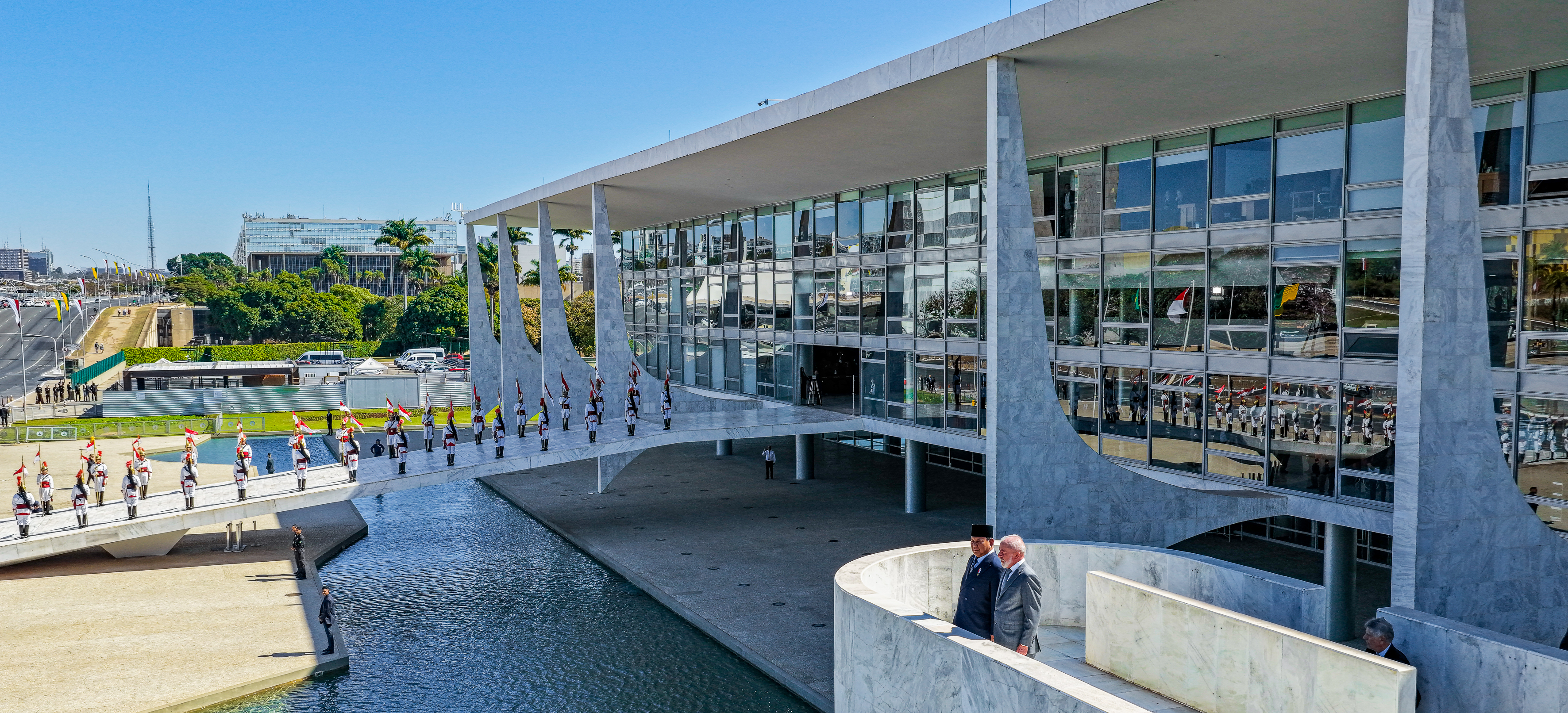
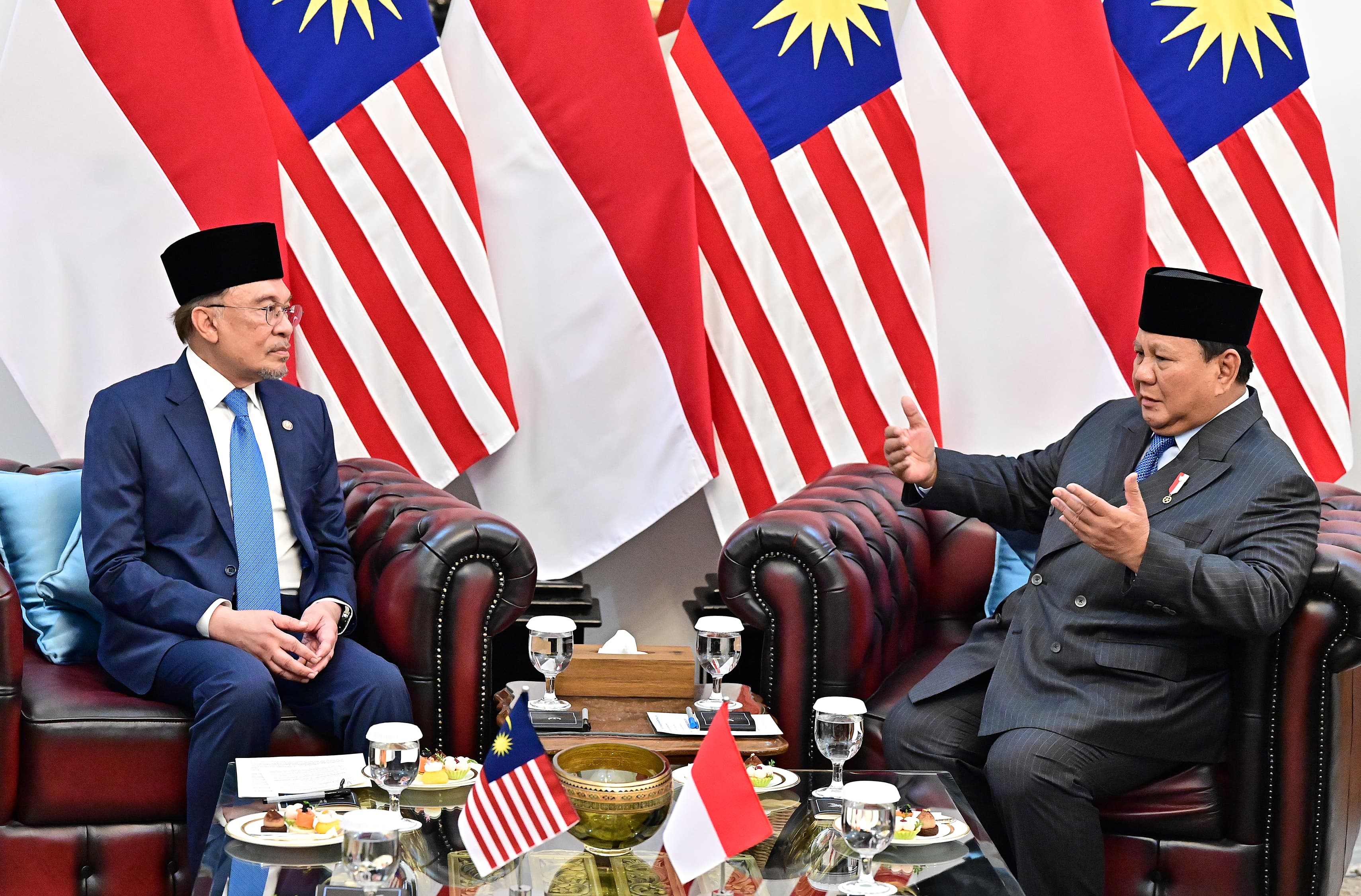
Image Credit: Lula and Prabowo during the official arrival ceremony at the Palácio do Planalto, Brasília, 9 July 2025. Ricardo Stuckert / PR, via Wikimedia Commons Licensed
"I'm sorry, President Lula, you're my friend, but my coffee is better than your coffee." President Prabowo Subianto at the Japan-Indonesia Business Forum in Tokyo, Japan, March 30, 2026.
Indonesia’s decision to teach Portuguese in its public schools inverts the usual logic of language as soft power. Language as a vehicle for soft power is well established in the literature, as in cases of state-linked institutes such as the British Council, the Goethe-Institut, China’s Confucius Institutes, encourage the counterpart to learn the country's language, which is not based solely on communication, but also on a process of transmitting values and creating a positive perception of those people towards the State.
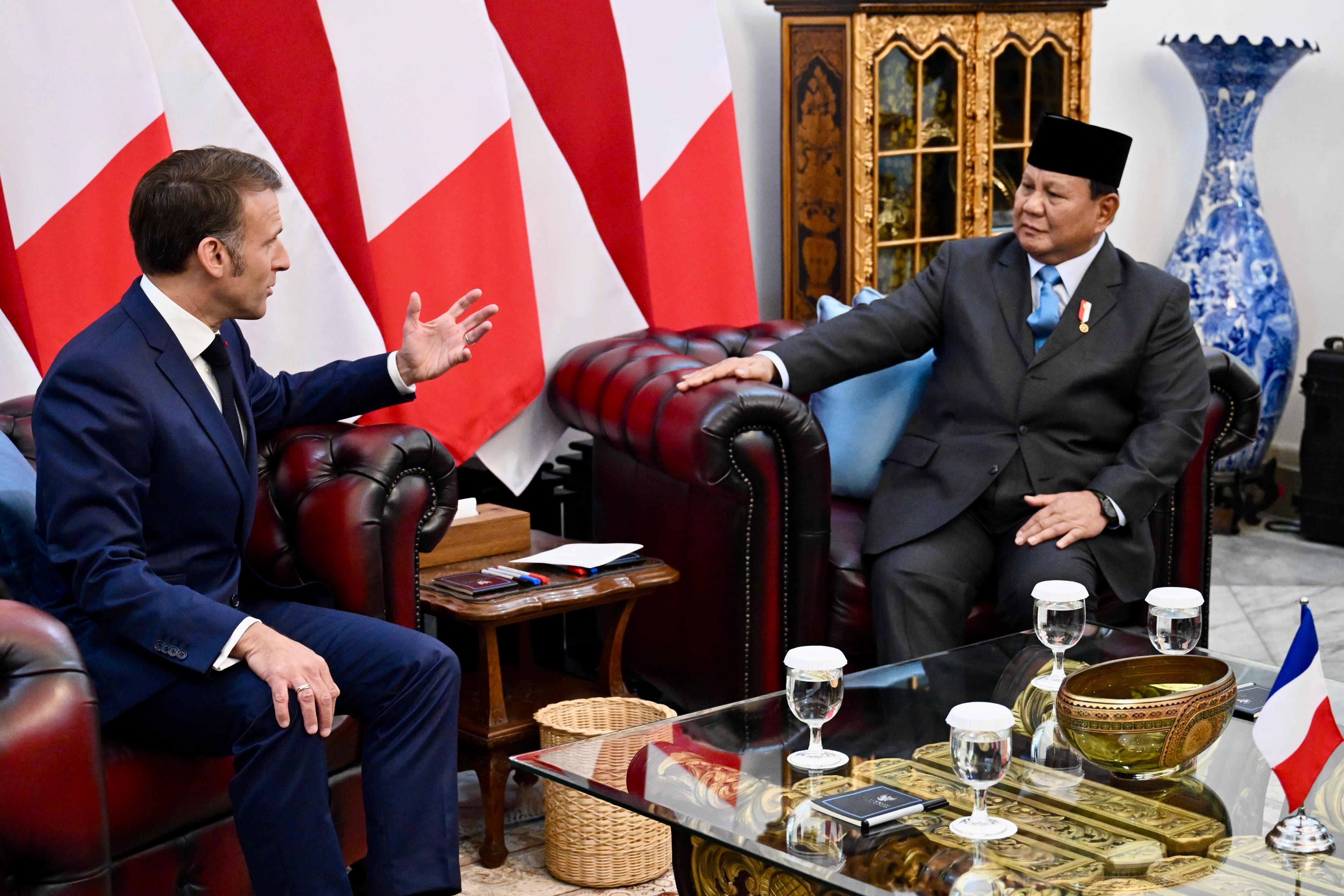
In October 2025, Brazilian President Luiz Inácio Lula da Silva and Indonesian President Prabowo Subianto met in Jakarta to sign new bilateral agreements. However, the most noteworthy development, which even took the Brazilian president by surprise, was the announcement to adopt Portuguese language instruction in the national school curriculum in Indonesia.
Prabowo argued that the inclusion of Portuguese is justified, given Brazil's strategic importance, to strengthen bilateral relations and ensure political, economic, social, and scientific benefits for both countries. Portuguese will thus join another set of languages considered a priority in Indonesian schools, such as English, Arabic, Chinese, and Japanese, to increase Indonesia's global engagement.
Indonesia-Brazil Relations under BRICS+
The two leaders met within a short window of three months, with Prabowo also having gone to Brazil in July 2025, and the second meeting establishing new plans, such as the signing of eight memoranda of understanding defining cooperation in areas such as energy transition, technological development, and sanitary and phytosanitary measures; Prabowo's pledge to contribute to the Tropical Forests Forever Fund (TFFF); and the goal of increasing bilateral trade to $20 billion annually.
This action represents a significant leap between the two countries, given that they have historically maintained good diplomatic relations since 1953, when Brazil established an embassy in Jakarta; however, these relations have been pragmatic in nature, focused on trade, with the flow of goods between the countries being quite modest — currently the average is $6 billion, that is, without representing a significant volume for their economies.
Another element that justifies the argument for Prabowo's rapprochement with Brazil is Indonesia's recent inclusion in BRICS. As recent scholarship on BRICS+ posit that the expansion of the group into the so-called BRICS+ tends to induce greater market coverage for its members, meaning the possibility of facilitating the integration of new markets. From a more diplomatic point of view, BRICS has been identified as the institutionalized platform for South-South cooperation and, by offering a counterweight to the established world order, even its expansion process tends to intensify these South-South ties, mainly with the existence of frequent bloc meetings and the formation of connectivity processes between different regional agreements, strengthening the diplomatic network between emerging powers and other middle powers. In this way, the bilateral meetings between Indonesia and Brazil can be considered a BRICS spillover process (the addition of new members), facilitating the dissemination of technological knowledge and administrative skills among members, as seen in the Memorandum of Understanding (MoU) agreement, and the exchange of know-how.
Following this reasoning, Prabowo recognizes Brazil as the main player in Latin America, just as Indonesia plays a similar role in Southeast Asia, as a regional power, a country that is consolidating its position as a middle power. Furthermore, the countries establish their identity as leaders of the global south; thus, proximity becomes a bridge for cooperation between the two countries. From the Brazilian side, this perception is reaffirmed; Brazil sees this proximity both as an opportunity for economic potential and as a shared identity on the global stage, with both countries being leaders of regional blocs (Brazil in Mercosur and Indonesia in ASEAN), in order to reduce dependence on third parties.
Consequently, in the context of an international system of heightened tensions between powers such as the US and China, both countries see the rapprochement with middle powers and also with South-South cooperation as a necessity for building bridges to strengthen sovereignty, in the face of a multilateralism affected by sanctions and trade wars.
Brazil has had strong economic ties with China in recent years, with China being its largest economic partner since 2009, with about 28% of its exports directed to the Chinese market, and the US representing about 10%. However, relations were significantly affected with the US in 2025, as Brazil was one of the countries most affected by Trump's tariffs, tariffs that were relaxed after negotiation, but established distrust with the superpower, and led Brazil to seek other alternatives. On the Indonesian side, a similar relationship exists, with 23% of exports to China and about 10% to the US, but another factor that stands out is the concentration of trade with Asia, which represents approximately 70%; thus, the search for diversification to other regions tends to be an opportunity for the country's economy.
Why Portuguese Matters In Indonesia-Brazil Relations?
However, even though the case analyzed is based on the opposite common approach in language as soft power, in which the Indonesian itself decides to include a foreign language in its schools, it can be argued that this is also based on a tool that seeks to bring Indonesia closer to Brazil to generate a cohesive relationship between Brazil and Indonesia, given that language and the study of a language represent not only a symbol of good diplomatic relations, but also a principle of "basic currency", in other words a common element or bridge connecting both countries to boost Indonesian understanding of Brazil and consequently the development of new businesses and cooperation projects.
As argued by Boran (2025) and Yadav (2025), Prabowo seeks strategic assertiveness, going beyond economic centrality, reaffirming the "Free and Active" Doctrine (Bebas-Aktif) and positioning Indonesia as an influential middle power, in order to influence global dynamics. To this end, the Portuguese language is constructed as one of the tools in the process of solidifying the construction of a common identity with Brazil (a middle power), based on an understanding of the creation of an alternative and more symmetrical model that respects South-South premises and ensures the positioning of these countries in a BRICS+ hedging process with strong Chinese influence, in addition to an international system understood as more volatile and a latent rivalry between the US and China.
However, Brazil will hold elections in 2026, and in a highly polarized political landscape, Lula's bid for a second consecutive term remains uncertain, which could bring about the return of a more right-wing and ideologically pro-U.S. government — a development that could ultimately affect the newly established relationships. Domestically, Indonesia also faces internal pressures, such as the imminent increase in energy prices due to the international oil crisis, which generates new tensions for Prabowo.
It remains to be seen how much this proximity and, consequently, this education policy will actually be established, along with the continuity of governments in these countries that see the need for these strategic policies. The potential exists, and in fact, the plans are being addressed, but as middle powers, the continuity of policies can be affected by a lack of resources or changes in government plans.
Overview
This article looks at Indonesia's October 2025 decision to add Portuguese to the priority list of foreign languages taught in its public schools, announced by President Prabowo Subianto during a state visit by Brazilian President Lula da Silva. Pasqueta argues the move inverts the usual logic of language as soft power: instead of an exporting state pushing its language outward through institutes like the British Council or the Goethe-Institut, the receiving state is volunteering to learn. He situates the gesture within a wider rapprochement under BRICS+ — eight memoranda of understanding, a $20 billion bilateral trade target, and Prabowo's pledge to the Tropical Forests Forever Fund — and argues both Brazil and Indonesia are using middle-power partnerships to reduce dependence on Washington and Beijing in a system stretched by US-China tension. The piece closes with the question of whether the policy can outlive the governments that announced it: Brazil's October 2026 election and Indonesia's domestic energy pressure both threaten continuity.

Gustavo Pasqueta is a Master’s student in Asian Studies at the Social Sciences University of Ankara (ASBU), funded by the Türkiye Bursları scholarship program. He holds a Bachelor’s degree in International Relations from São Paulo State University (UNESP), during which he participated in the Santander Ibero-American Exchange Program, completing one academic semester at the University of Coimbra in Portugal. He was also selected for the Confucius Institute Summer Camp (2019), where he undertook cultural and language studies at Hubei University in China.
In this article, Aniello Iannone critically evaluates the ten-year trajectory...
The global order is moving beyond rigid bloc politics toward...
In this article, Luo Chen Jun highlights a striking historical...
In this article, Muhamad Ferdy Firmansyah highlights how climate technology...
In his latest article, Aniello Iannone examines the gap between...
This article analyzes Indonesia's ambitious military modernization through its strategic...
DeepRare is being hailed as a major breakthrough in the...
This article analyzes President Prabowo’s decision to skip the June...
This article analyzes the phenomenon of "sibling rivalry" at the...
This article evaluates the normative frameworks offered by China’s four...
This article examines the 2025 Thailand–Cambodia border conflict to evaluate...
This article examines the May 2026 ASEAN Summit in Cebu...
This article examines the May 2026 Beijing summit between Xi...
This article examines how the rise of narcissistic foreign policy—exemplified...
In October 2025, Indonesia's President Prabowo Subianto announced that Portuguese...
This article argues that recent U.S.–Israel military actions against Iran...
This article examines Türkiye’s evolving "Third Way" in Africa, an...
This article critically examines Indonesia’s evolving role from a quiet...
This article provides a firsthand account of how Pakistan emerged...
This article examines how disruptions in the Strait of Hormuz...
This article examines Indonesia’s participation in the Board of Peace...
This article examines what the attempted sale of CK Hutchison's...
This article examines the Kudankulam Nuclear Power Plant as a...
This article examines Nepal’s strategic position within the Indo-Pacific and...



Leave A Comment